





Infinity Stonepaper
in schools

The classroom of the future needs tools that encourage the natural spirit of discovery instead of blocking it with finality. Infinity Stonepaper is far more than just a new writing material. It is a physical operating system for a completely new learning culture.
Learning on a new level

How Infinity Stonepaper works in schools

Psychological Safety Through Anonymity
Visible and Shared Thinking
Collaboration instead of lectures
The rhythm of opening and closing
Inclusion through Effortless Writing

On paper, every mistake is a visible flaw and for many learners, an invisible block. On Infinity Stonepaper, this block disappears with a damp cloth. What remains is not the mistake, but the experience gained. This guaranteed disappearance also applies to sensitive moments: first attempts at a new language, silent doubts in class council, anonymous questions in biology or ethics. Where no one is exposed, quiet voices dare to speak.

In their notebooks, teachers usually only see the finished result and rarely the path to get there. When work is done on tables, windows, and walls, thinking becomes public. Teachers recognize in real time where a concept is understood and where support is needed. Learners can connect with the open thoughts of others and continue thinking in dialogue. Diagnostics then no longer happen during correction in the evening, but in the moment of learning.

A whiteboard on the wall enforces a hierarchy where one person stands at the front and the rest consume. An Infinity Stonepaper Board (normal or XXL) placed flat in the middle of a table immediately breaks this structure. Everyone leans over the same thinking surface, drawing mind maps and discussing solutions at eye level. Passive listeners become active contributors without having to change the seating arrangement.

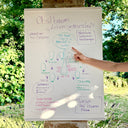
Research into modern learning spaces shows that learners demonstrably think faster, longer, and more boldly on vertical, rewritable surfaces. Infinity Stonepaper adheres to windows, mirrors, and glass surfaces with just a few drops of water. Cards can be physically moved, stacked, and regrouped. This tactile sorting reveals patterns that remain hidden in linear lists. The class leaves their chairs, changes perspectives, and learns with their whole body.

Effective learning requires two movements: broad collection and focused consolidation. This rhythm is missing on paper because everything remains permanently. Here, the change becomes the natural rhythm of the lesson. Learners bravely collect ideas, collectively choose, document the essentials via photo, and start fresh with a clean slate into the next thought. This also allows for a much more meaningful integration of digital devices.

Digital devices introduce countless distractions into the classroom. Infinity Stonepaper creates a clear separation. The creative phase remains analog, tactile, and deeply focused. Ideas emerge from the material without a push notification interfering. Only when the thinking process is complete are the results photographed and processed digitally. Analog and digital complement each other instead of clashing.

The material feels like a smooth, cool pebble. The pen glides softly, without the scratching resistance of cellulose paper. For children with dysgraphia, motor impairments, or massive writing frustration, this is a noticeable relief. The cognitive advantage of handwriting is preserved, while physical exertion is replaced by quick successes.

For practical use in everyday teaching

1. Organization

1. Organization

How can the material be well organized?

2. Pencils

2. Pencils

How do you deal with the multitude of pens?

3. Use in the Classroom

3. Use in the Classroom

What new possibilities are there?

4. Combining Digital

4. Combining Digital

How can tablets and smartphones be effectively connected?

5. Integrate cleaning

5. Integrate cleaning

6. Use outside the classroom

6. Use outside the classroom

1. Organization

1. Organization

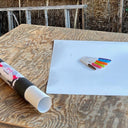
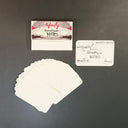
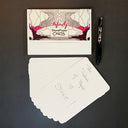
Infinity Stonepaper can be stored in a space-saving way: after the session, notes and cards can be cleaned and returned to their original packaging – one group, one pack, no chaos. The large formats roll up and stand upright in their carrying roll or a basket. An open pen box next to them immediately makes it clear which pens may be used.

The effect

This is how a small Stonepaper corner is created in the classroom – and it has an effect that goes beyond mere organization: as soon as the materials are placed on the table, everyone knows what comes next. No frontal teaching. Instead, collaborative thinking, collaborative work – the unpacking becomes a signal that changes the learning mode.

2. Pencils

2. Pencils

Not every pen works on Infinity Stonepaper. Whiteboard markers, ballpoint pens, and alcohol-based pens leave permanent marks that cannot be removed. Thermo-erasable pens like the Pilot FriXion, water-based felt-tip pens, or a variety of others (like the Stabilo Woody) are well-suited as they can be wiped off without leaving any residue.

The solution: Pencil Boxes

For lessons, a simple box per table group, equipped with the appropriate pens, is recommended. The rule is clear: personal pens stay put, and the box pens go back into the box after the session. This keeps the right materials together and prevents nasty surprises on the Stonepaper.

3. Use in the Classroom

3. Use in the Classroom

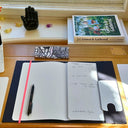
Once the material has been distributed, there is a simple basic pattern: write, save, wipe. In practice, this means: The class works freely on the Stonepaper for a period, for example, collecting vocabulary, solution paths or arguments. At the end, what is to remain is documented by photo. Then it is wiped clean and the next task begins on the same surface.

Alternating between individual, partner, and group work, a clear announcement helps to define what format is intended for what purpose: small notes per person for individual notes and ideas, cards for groups to sort and discuss, large boards in the middle of the table for shared overviews. This way, learners know what mode they are working in without explanation.

4. Combining Digital

4. Combining Digital

Tablets and smartboards bring a lot of potential to the classroom, but also real problems: PISA 2022 showed that around 60 percent of students in Germany are distracted by digital devices in class, deep text comprehension on screens decreases, and smartboards are often only used as digital chalkboards. Infinity Stonepaper addresses precisely this: the creative phase remains analog, focused, and free of push notifications. Writing, sketching, and discussing happen on the material without a device interrupting the flow of thought.

The change

Only once the results are available do the digital tools come into play. A quick photo saves the whiteboard notes or group work, transfers them to Moodle, itslearning, or the school cloud, and makes them retrievable at any time. What would have disappeared from a traditional blackboard is permanently documented. Stonepaper thus becomes the link between analog depth and digital availability – both complement each other instead of displacing each other.

5. Integrate cleaning

5. Integrate cleaning

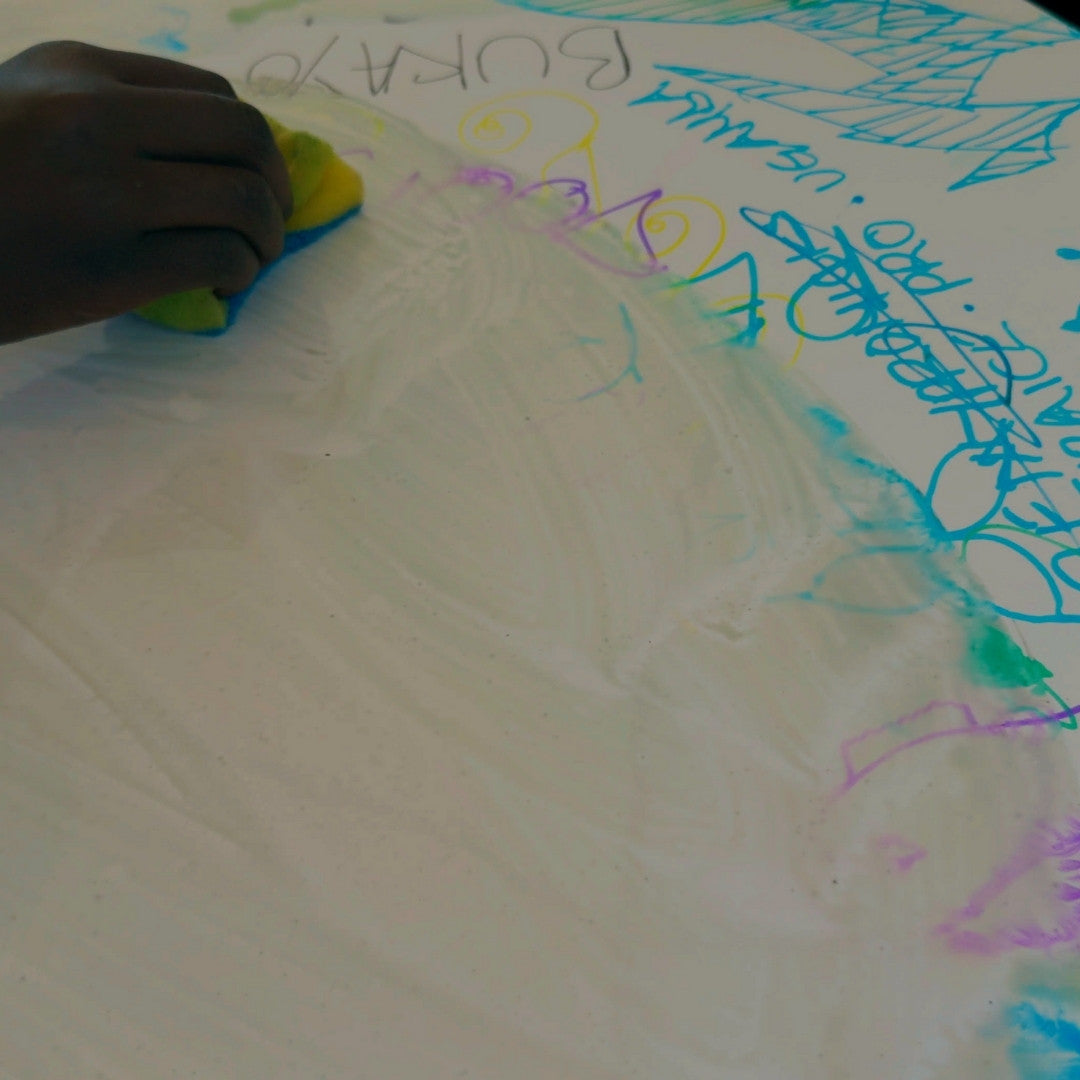
Cleaning is best scheduled directly at the end of the lesson and usually takes no longer than five minutes. A damp cloth or sponge per table group is sufficient to make Notes, Cards, and Boards ready for use again for the next lesson. Those who work with erasable pens can even get by with a dry cloth.

Advantage

If the students take on this step themselves, they quickly become experts with their materials. They notice which pens come off easily, which need a little more pressure, and how the surface can be best cleaned. After a few uses, this becomes a well-rehearsed routine that is a natural part of the end of the lesson. Teachers don't waste time cleaning up, everyone helps, and the material is reliably ready for the next class.

6. Use outside the classroom

6. Use outside the classroom

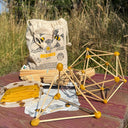
Infinity Stonepaper is waterproof, tear-resistant, and dirt-resistant, making it ideal for everything that happens outside the four walls of the classroom. In the school garden, plants can be sketched and labeled directly on site; in the forest, observations, finds, or weather data can be recorded; and in the schoolyard, spontaneous mind maps or station plans can be created. Even if the material falls into the mud or a sudden rain sets in, everything remains intact and can simply be wiped clean afterward.

New Opportunities

Practically speaking, this works with any size: Notes and Cards fit into any jacket pocket, and the larger Boards can be rolled up and carried in a backpack. This turns the forest, the school garden, or the neighborhood into an extended classroom, without material getting lost or learning content being ruined. Education for sustainable development, general studies, and project weeks can thus be easily moved to where learning is actually experienced.

1 / 6

Stone paper vs classic wood pulp paper

Infinity Stonepaper is, at first glance, more expensive to acquire, but on closer inspection, it is the significantly more affordable, more comfortable, and more ecological solution.

Comparison

Stone paper

Stone paper

classic wood paper

classic wood paper

Reusability

Stone paper

At least 500 times, longer with proper handling

classic wood paper

Not at all

Durability

Stone paper

Water- and tear-resistant.

classic wood paper

Sensitive to water and creasing.

Ecological level

Stone paper

Production is completely free of wood, drinking water, and bleach, and requires significantly less energy than traditional pulp production. Because each sheet is reused hundreds of times, the ecological footprint shrinks to a minimum with each use.

classic wood paper

Production consumes enormous resources: up to three tons of wood, thousands of liters of water, and a lot of energy and chemicals are needed per ton of paper. Since every sheet ends up in the trash after a single use, this enormous expenditure of raw materials is immediately wasted. Even traditional recycling remains resource-intensive.

Economic Level

Stone paper

Invest once, save long-term: Despite a higher unit price (€15/sheet), costs decrease to approx. 3 cents per use due to over 500 reuses. This is 33 times cheaper than regular flipchart paper. The purchase pays for itself after just 15 uses and replaces material worth four-digit figures over its lifespan.

classic wood paper

Seemingly inexpensive per sheet, but extremely expensive overall. Since each sheet is discarded after a single use, there is a constant need for new purchases. These ongoing expenses for a pure disposable product often add up to four- or five-figure sums over the years.

Materials Management

Stone paper

No recurring procurement costs, no storage problems, no empty material cabinet before class. What's there once stays ready for use.

classic wood paper

Order management, warehousing, disposal, potential supply bottlenecks.

Application

Stone paper

For processes

classic wood paper

For final results