




Beenius Museum: From haptic model to built reality
Three perspectives on thinking through doing

Beenius is not a typical toy. For us, it's a mini construction kit for real visions – a silent, tactile repository of ideas that impressively demonstrates what's possible with pure imagination and incredibly simple materials. In a time when learning is increasingly shifting to flat screens, we're literally bringing understanding back into our hands. When we build models, we intuitively grasp spatial relationships, mechanics, and statics.
1. Storytelling & Space Imagination

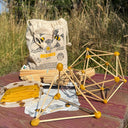
Here, we transform abstract stories and ideas into tangible, walk-in spaces. Using delicate bamboo rods, our special Infinity beeswax, and everyday objects like recycled lids or scraps of paper, initial, vibrant scenes emerge instantly. It's a form of spatial storytelling: teams, students, or workshop participants can immediately see the same thing and continue building together in one place—whether it's a fictional world or a real project approach. Misunderstandings dissolve as soon as the idea is physically present on the table.
2. Geometry meets Community

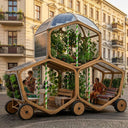
In the next stage, we harness the power of Platonic solids and natural Fibonacci ratios. The result is, for example, a modular community house consisting of interlocking octahedrons and pyramids. What's exciting is that the system forces us to work with static accuracy, yet allows us complete creative freedom.
By simply removing or adding individual bars, the openness of the space can be intuitively controlled – from an intimate, protected retreat to a transparent workshop area with an integrated rooftop garden. Here, the Solarpunk philosophy becomes tangible: We build organically growing systems that adapt to the needs of the community.

3. Model-to-Reality: The Uganda Yurt

The ultimate proof of the power of scalability: What works on the desk also works in the real world. A small, hexagonal model (a yurt), playfully designed with Beenius, served as the exact architectural blueprint for a real, 25-square-meter prototype in Uganda.
On-site, the miniature vision was translated into reality. We worked with different bamboo species (Bambusa vulgaris and Oxy), which we had cut into equal lengths (3m). Using simple, locally manufactured metal connectors, we replaced the Beenius wax of the model with stronger connectors for our actual structure in MODELtoREALITY. With AI support (taking a photo of the model and providing the lengths of the poles), the angles were quickly calculated, and we ultimately assembled the hexagonal structure in about 3 hours without any prior experience.
The whole principle has great potential, as it is simple, can be implemented quickly, and ultimately allows one's own ideas to be realized through a modular plug-in system and with the help of regenerative materials such as the much underestimated bamboo, creating a variety of new, smart, ecologically and economically sensible structures.


"Great transformations often begin with a small bamboo stick."
Start your own project
Let us create spaces where thinking through doing becomes second nature.
Discover the Beenius set now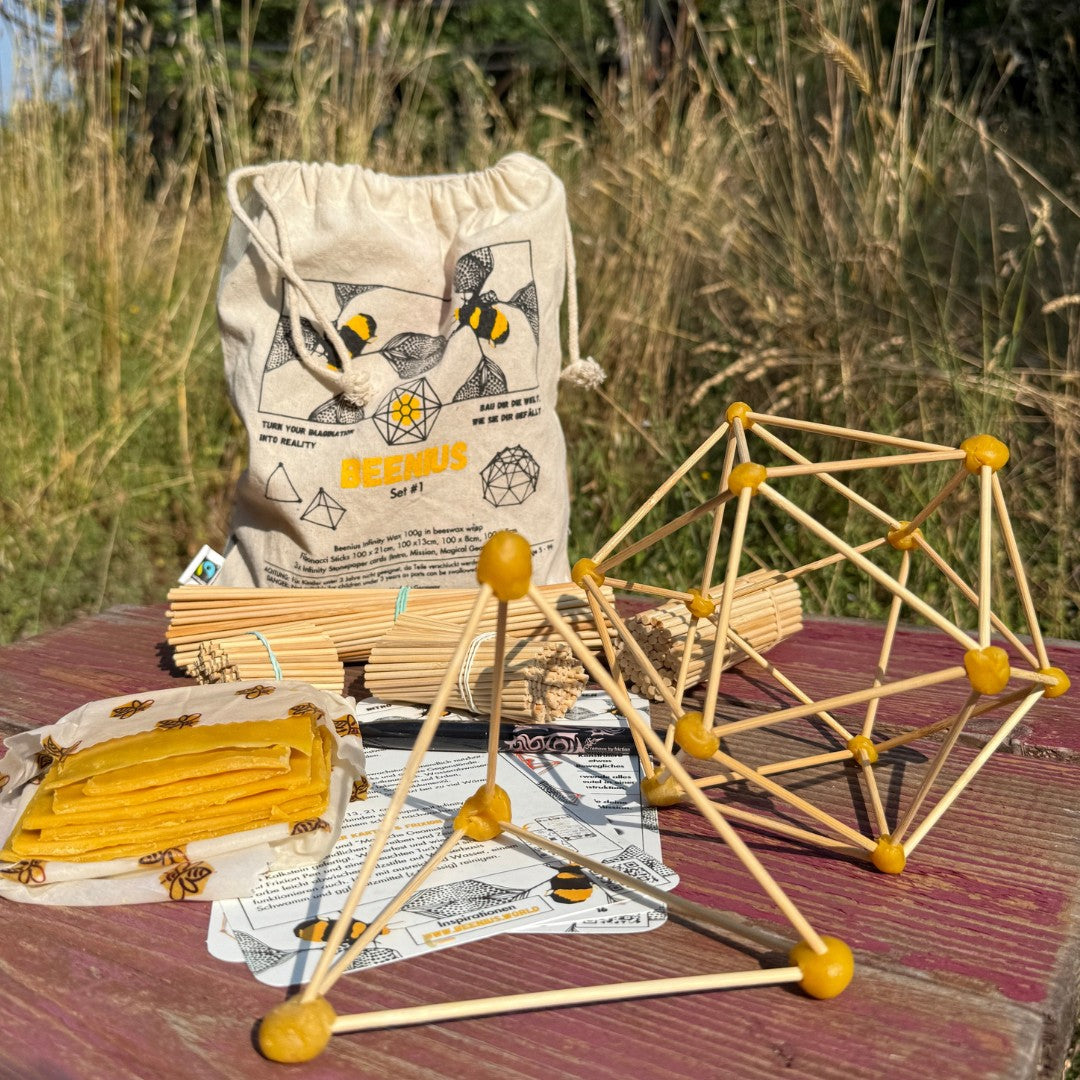
Beenius Set
The core components: beeswax and bamboo sticks. Build models, understand mechanics, and scale your own architectural visions. Expand it infinitely with the things you already have.
To Beenius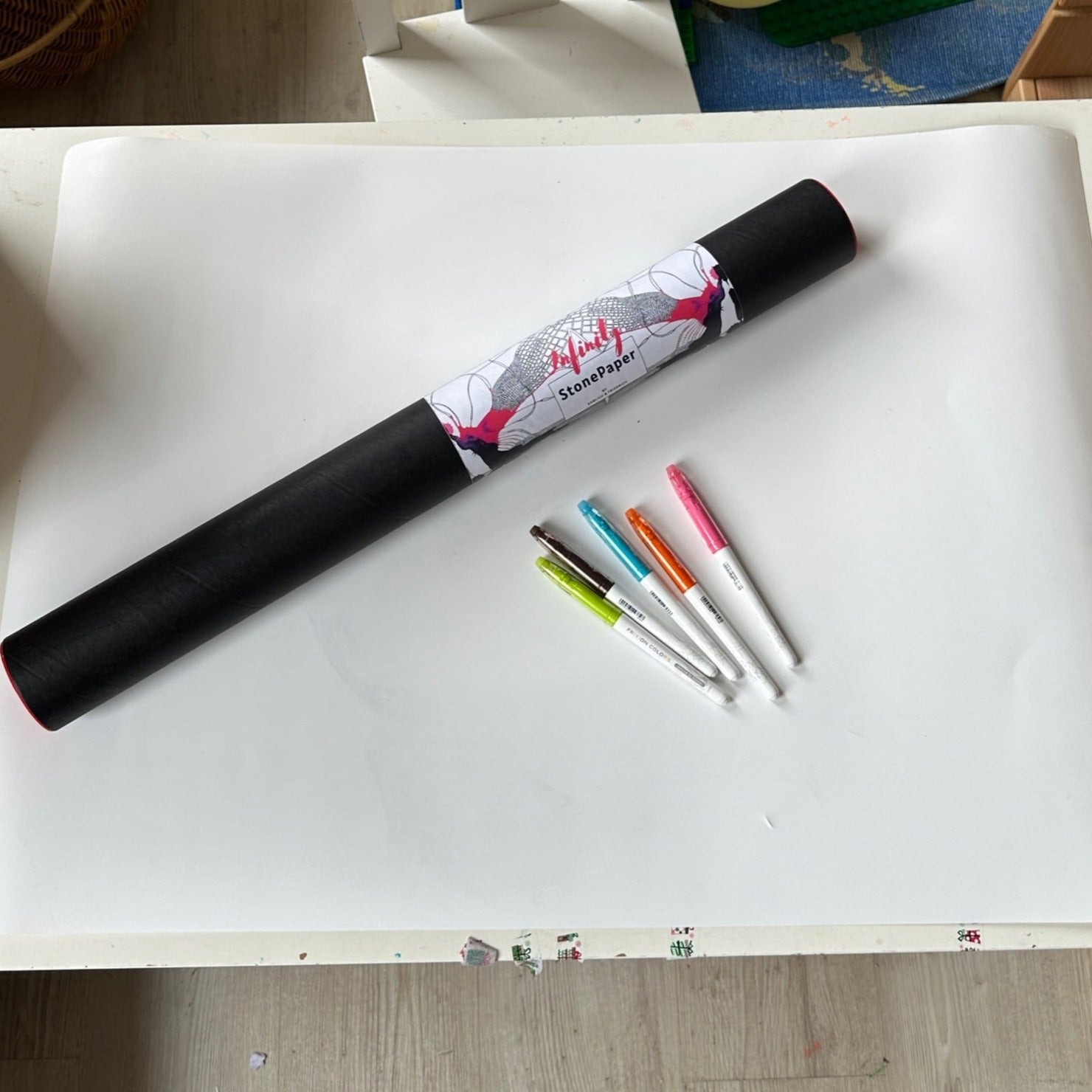
Infinity Boards
The perfect base for your next Beenius model. Sketch the floor plan on washable Stonepaper and build on top of that.
To the boards


