

Infinity Stonepaper in use.
Write on it, wipe it with a damp cloth, keep thinking. Seven situations, from the desk to the garden, and in each of them a different reason to use the same surface again.
Infinity Stonepaper connects...
At the computer, in the kitchen, on the train
With your own
thinking.
A sheet lies within reach next to the computer, a Board underneath, a few cards beside it. Your head is free for the next thought, and in the evening the surface is empty again.
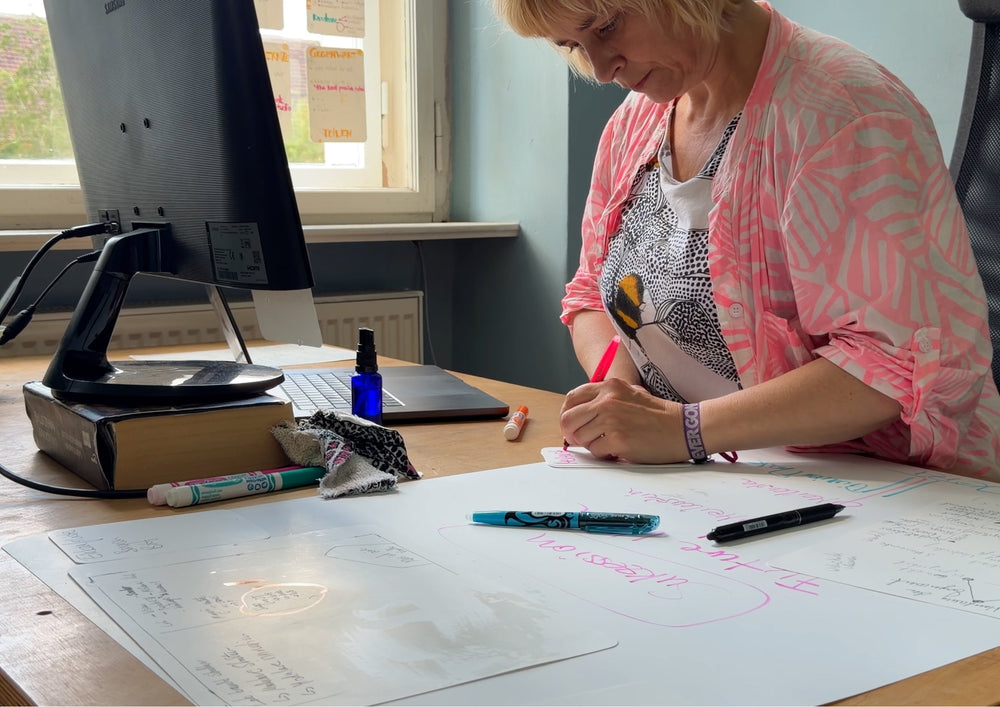
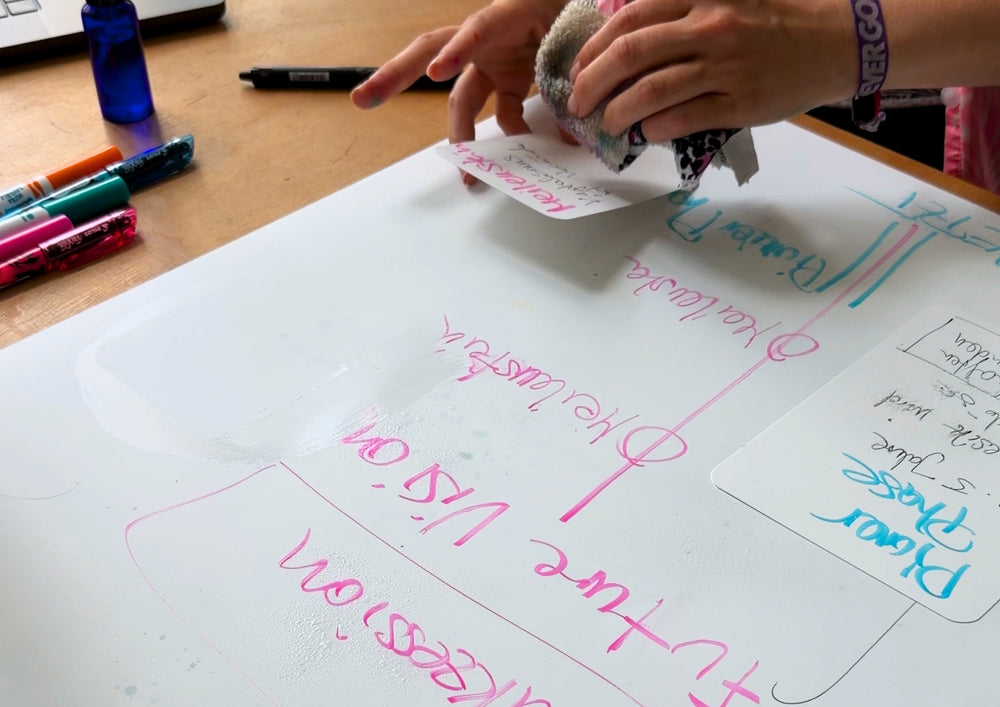
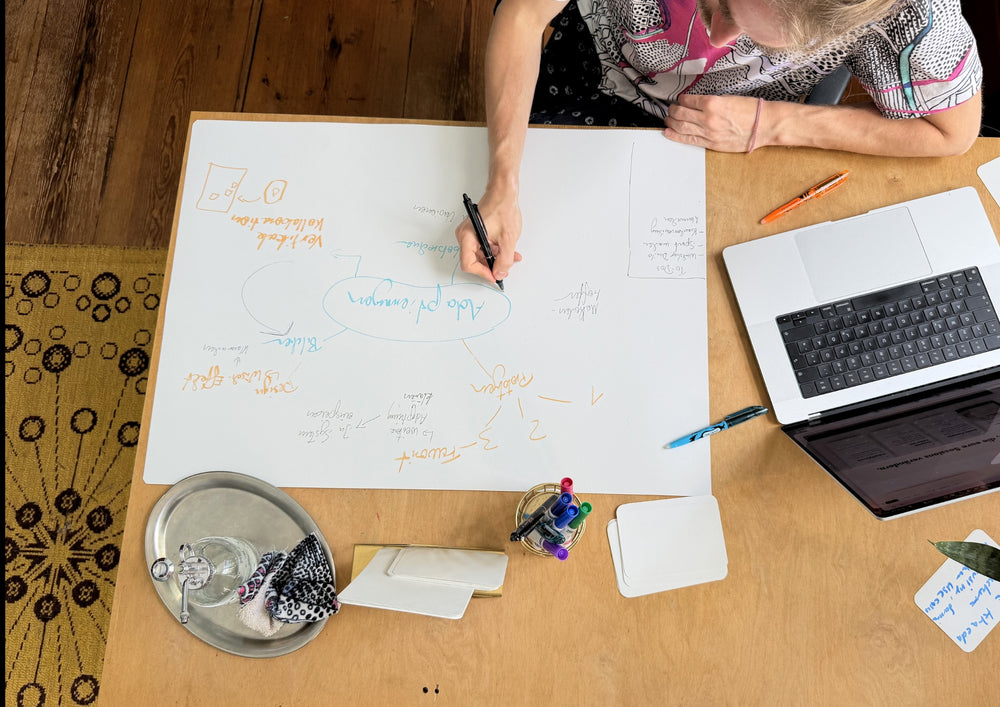
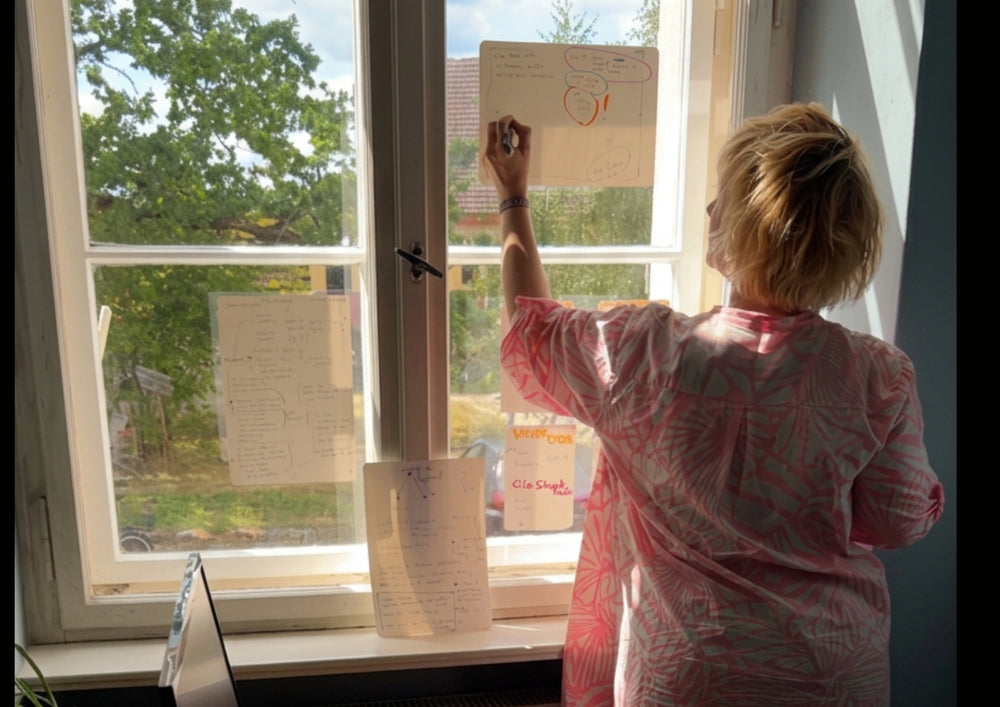
The thought from the phone call is on the sheet before a program is open. In the evening, what counts tomorrow stays, the rest is wiped off.
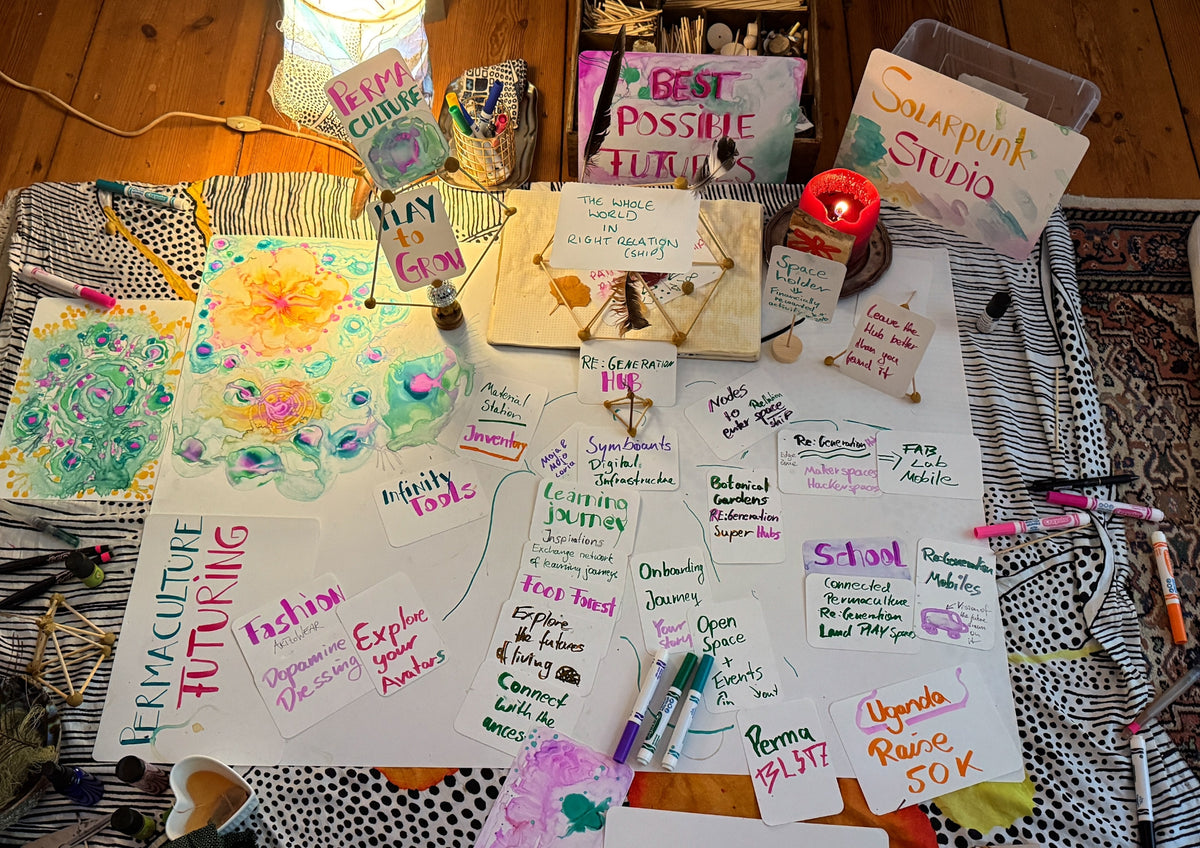
The Board is the surface, the Cards are the thoughts on it. A quick note on a card, move it, reorder it, the big picture on the Board. Everything stays within reach and is played differently every day.
A lot of information at once, and still order: whatever has lost its meaning gets wiped away, on the table as in your head. The rest stays visible and can be worked on.
On the table lies what is up right now. What holds for longer moves to the window and stays in view, for the youngest too. That gives the desk two levels.
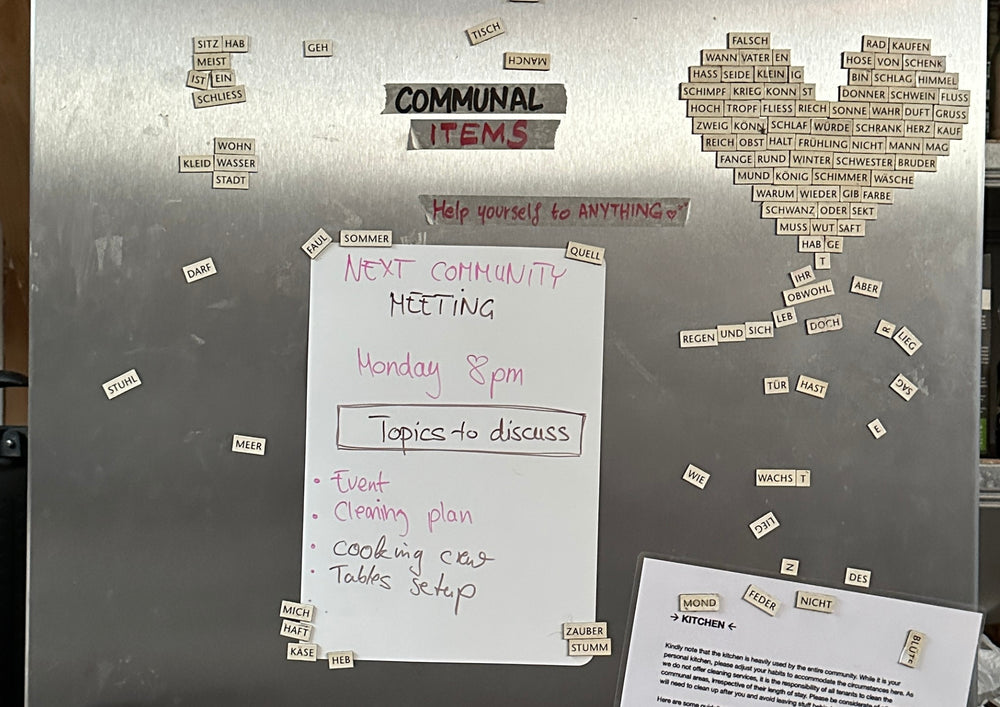
With magnets, or with water on the back, it holds on any smooth surface in the home. Messages, announcements and plans hang where everyone walks past.
In pairs, in a team, with the family
Together.
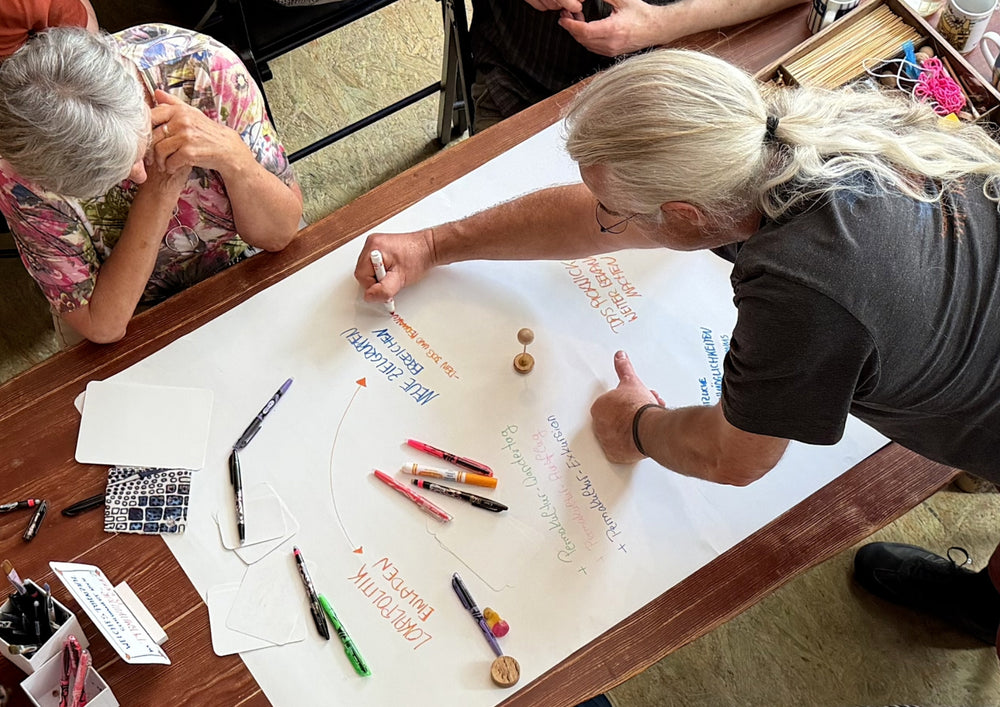
A Board lies in the middle, a bundle of cards beside it, every hand takes one. Someone moves a card, and the conversation turns with it.
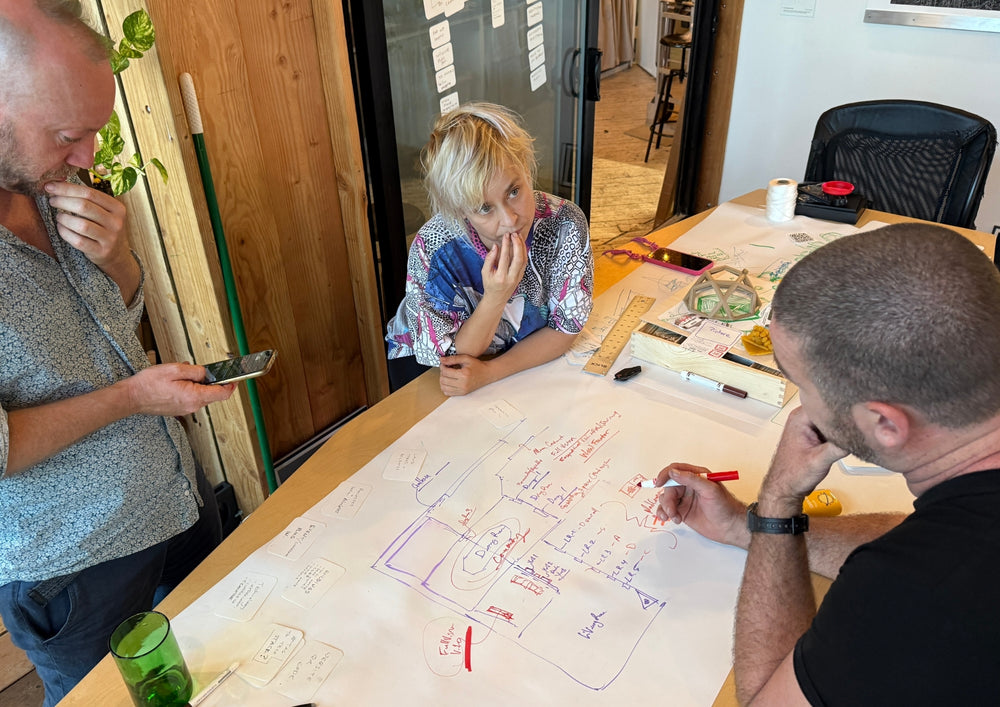
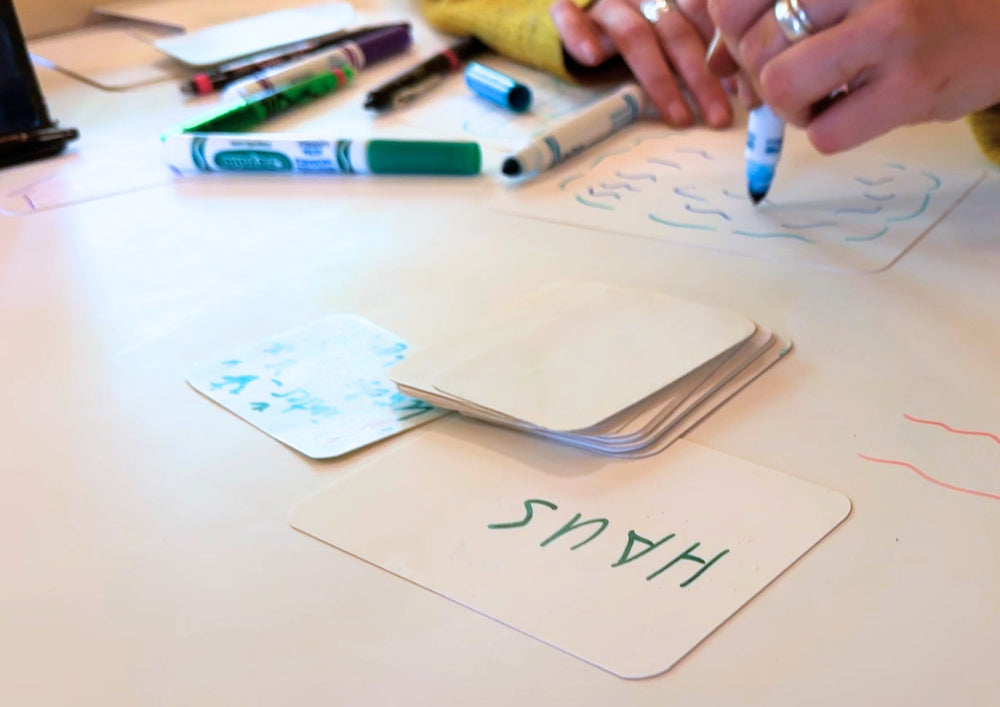
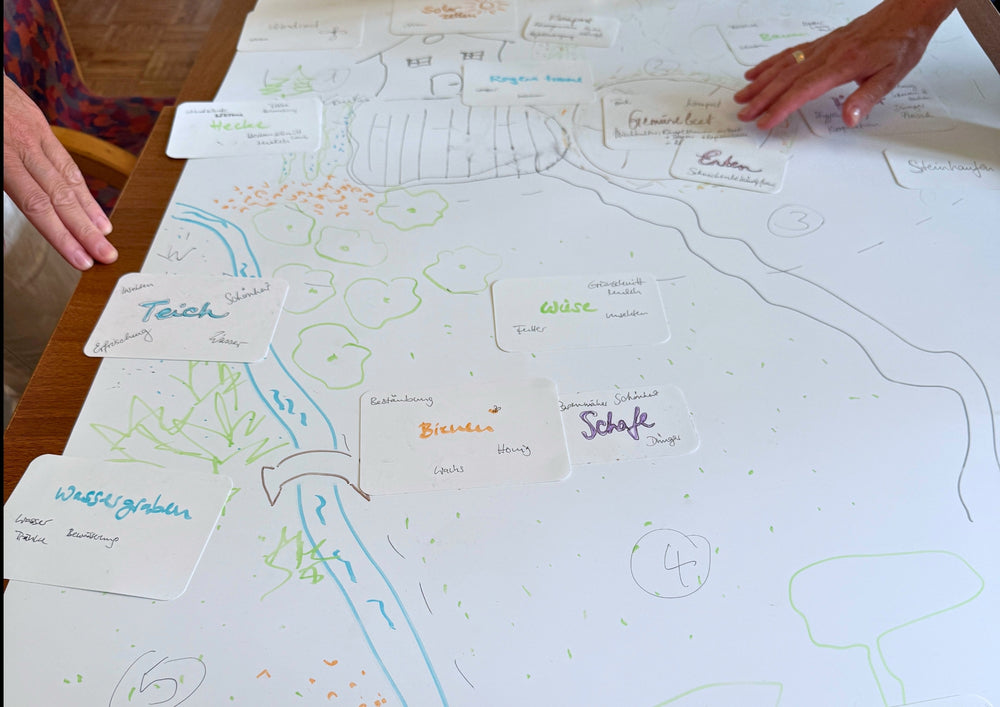
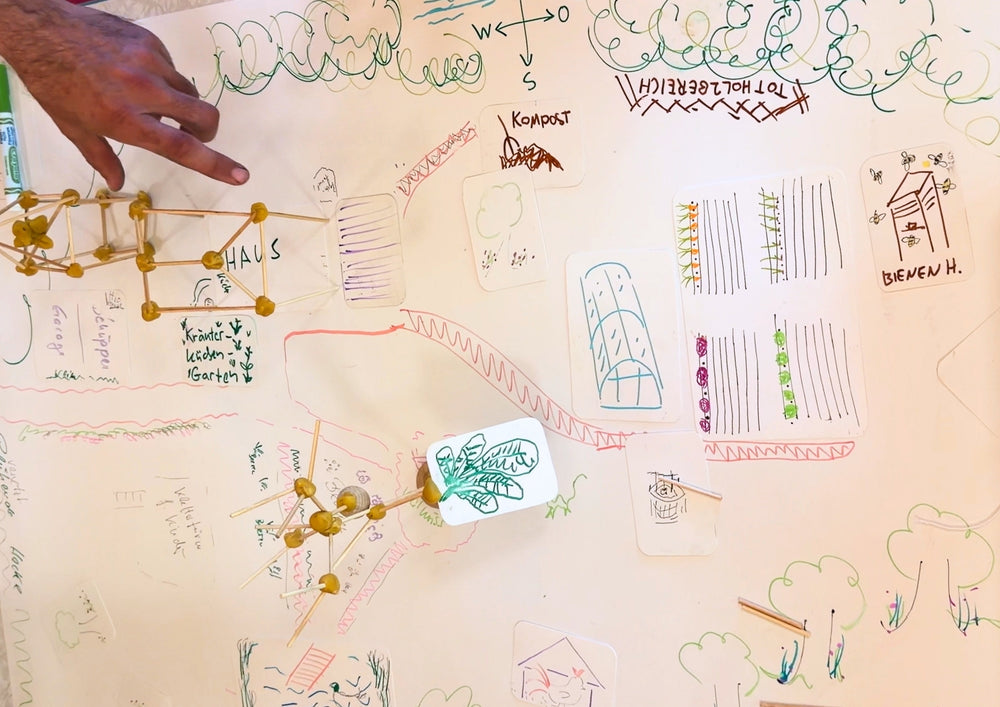
On your own it is a tool. As soon as several people work on it, methods, concepts and designs come about together: at the same table, with the same cards in different hands.
In our permaculture courses the participants design their gardens directly on the surface. The method lands while drawing, in a very practical way, and the theory follows what is already lying on the table.
Everyone brings their ideas in at the same time, and the conversation immediately becomes something visible. What is on the surface is out of your head, and the group has room to think further.
Forming clusters, laying out structures, putting elements somewhere else. While things move, patterns become visible that stay hidden in a list, and participation grows because every hand is allowed to step in.
A whiteboard on the wall invites one person to lecture. A Board on the table invites everyone. Thoughts land directly on the surface, visible to the whole group, and listeners become co-creators.
Window, glass wall, partition wall
With the room.
Dampen the back, press it on, done. What was on the table a moment ago hangs on the glass a minute later and holds for everyone in the room. Whoever stands in front of it keeps sorting on their feet and sees the whole thing while doing it.
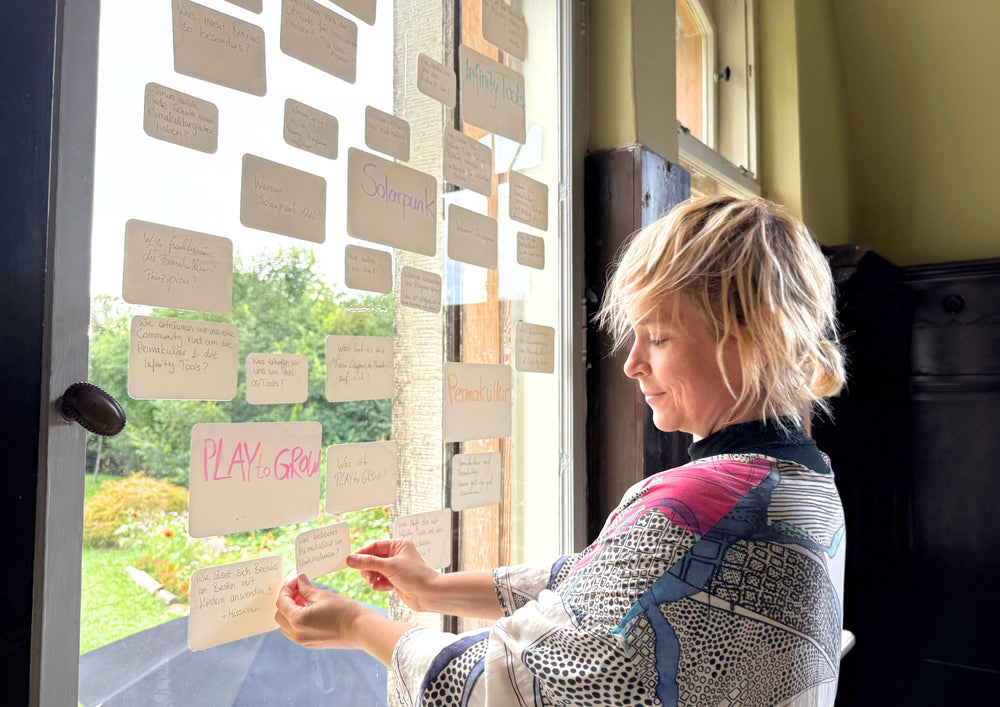
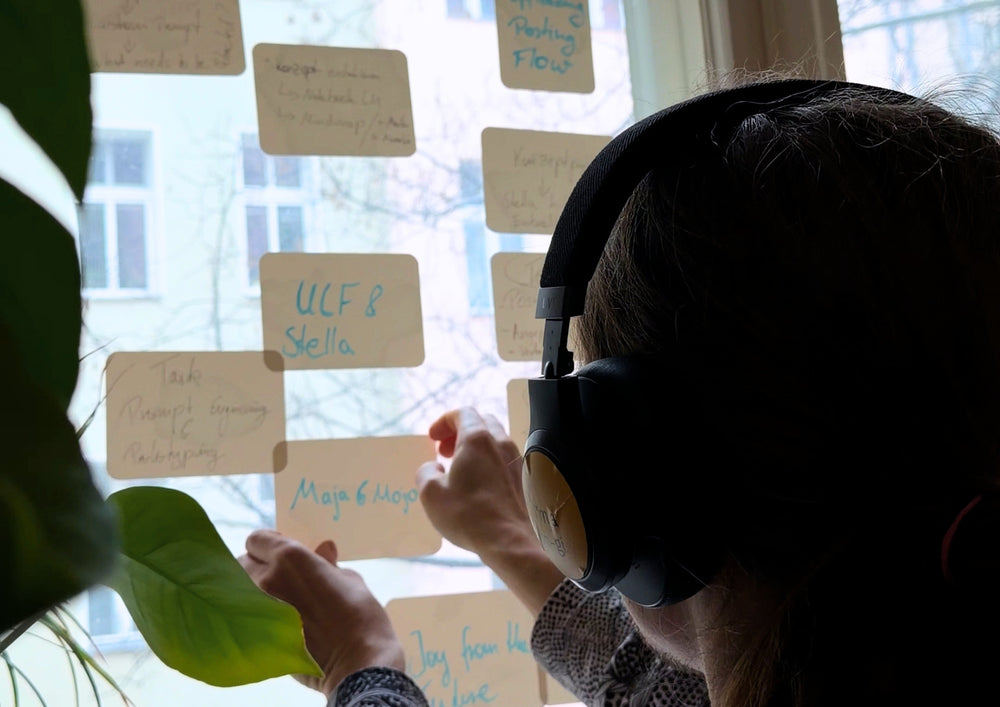
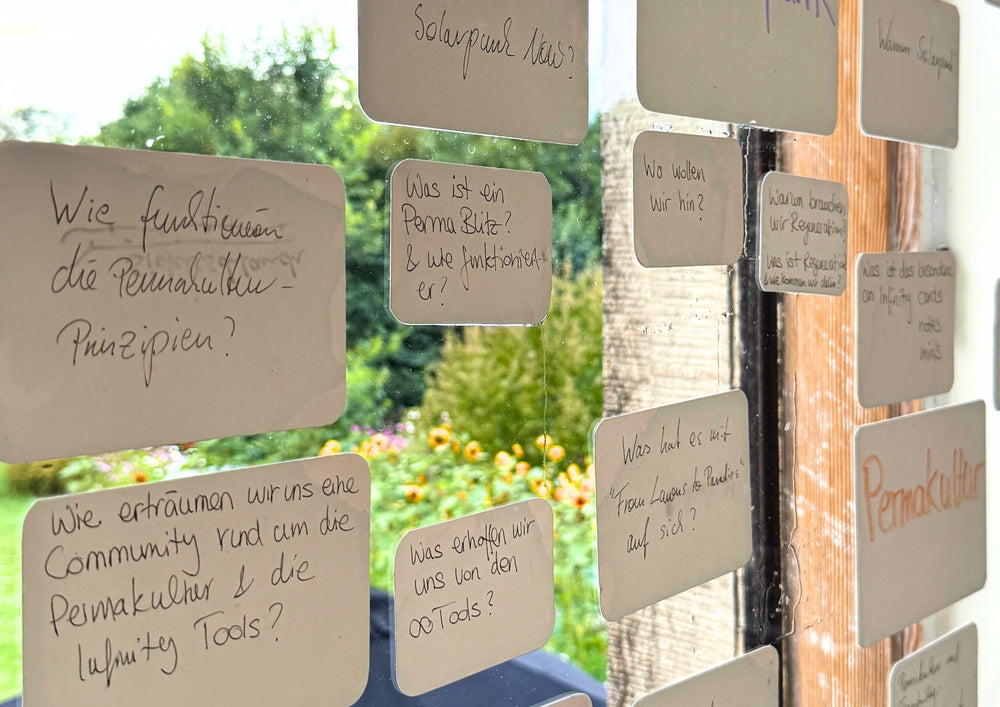
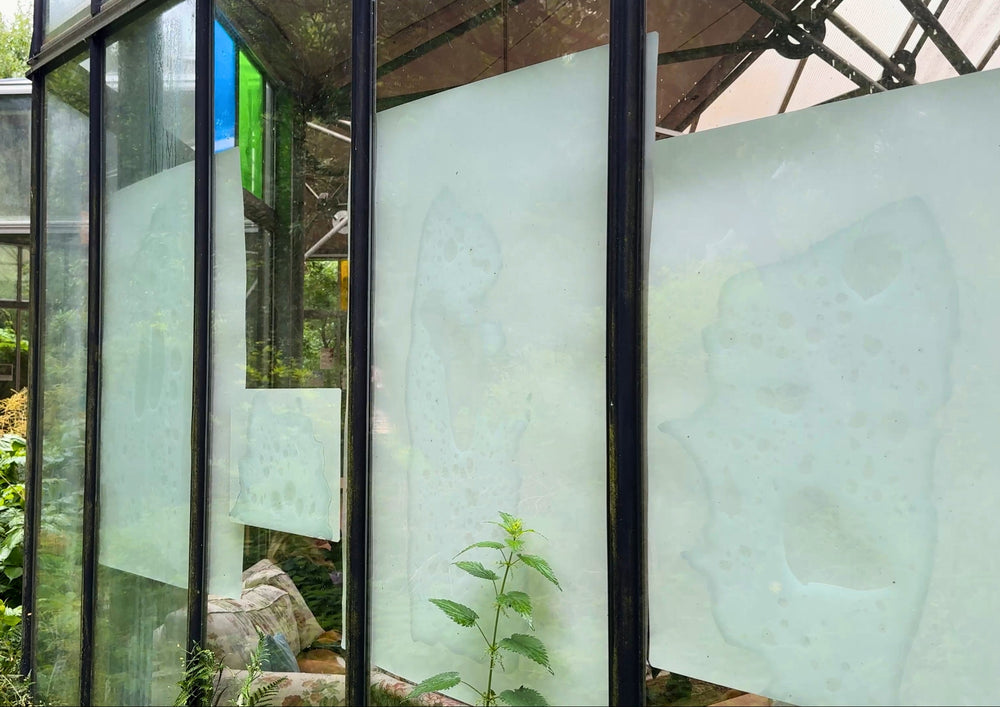
Every smooth surface becomes a working surface, glass best of all. On the window the cards hold for as long as you need them, on wood only briefly. One look at the window, and the state of the project is there.
Sorting in the vertical, moving while you do it, the whole thing stays in flow. Whoever leaves the chairs thinks with the whole body, and with music in your ears it is especially enjoyable.
Every room has windows. That gives you a wall you can work on in any place, and as the group changes place it changes perspective too.
With a bit more water a large Board holds on the pane as well. A glass front becomes a creative space, and the surface grows with the subject.
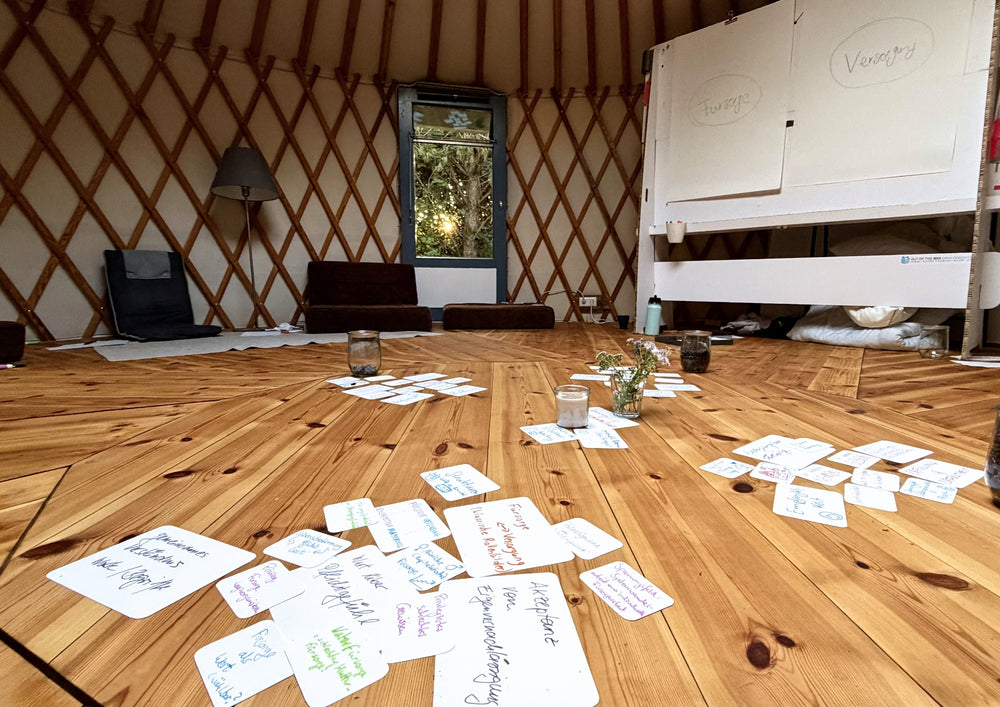
On the floor or on the cardboard partition: the Boards turn any room into a working room, a yurt included. Where the group is, there is the room.
Seminar room, school, conference
With those
who are about to arrive.
A surface lies at every seat, the shared ones hang on the wall. The room invites before anyone has said a word. The next morning everything is empty again, and the same room carries a different topic.
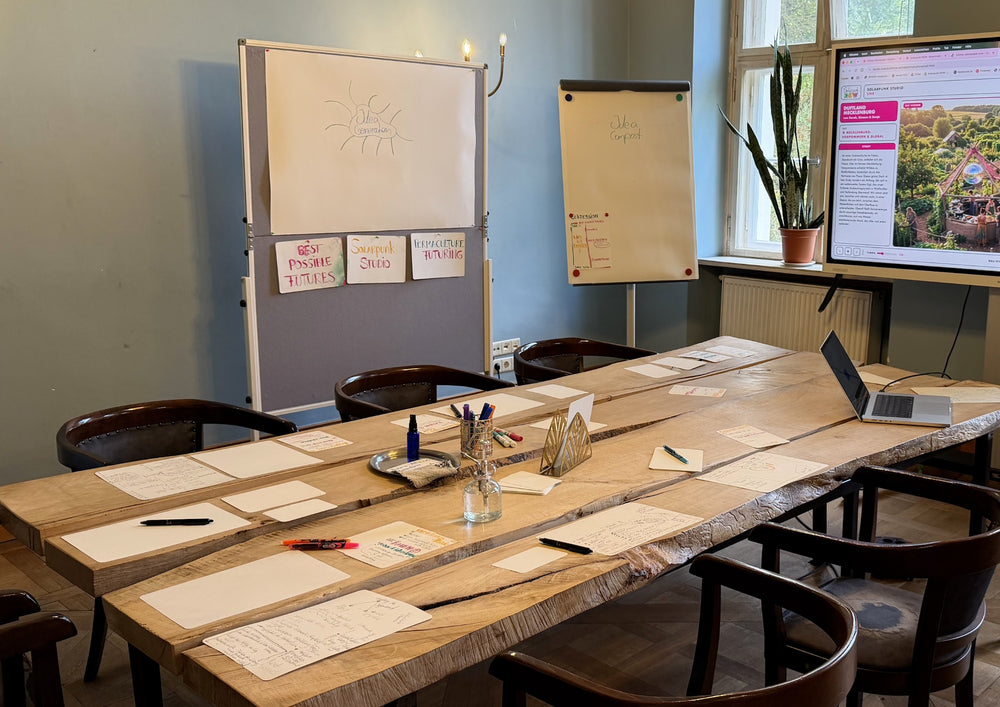
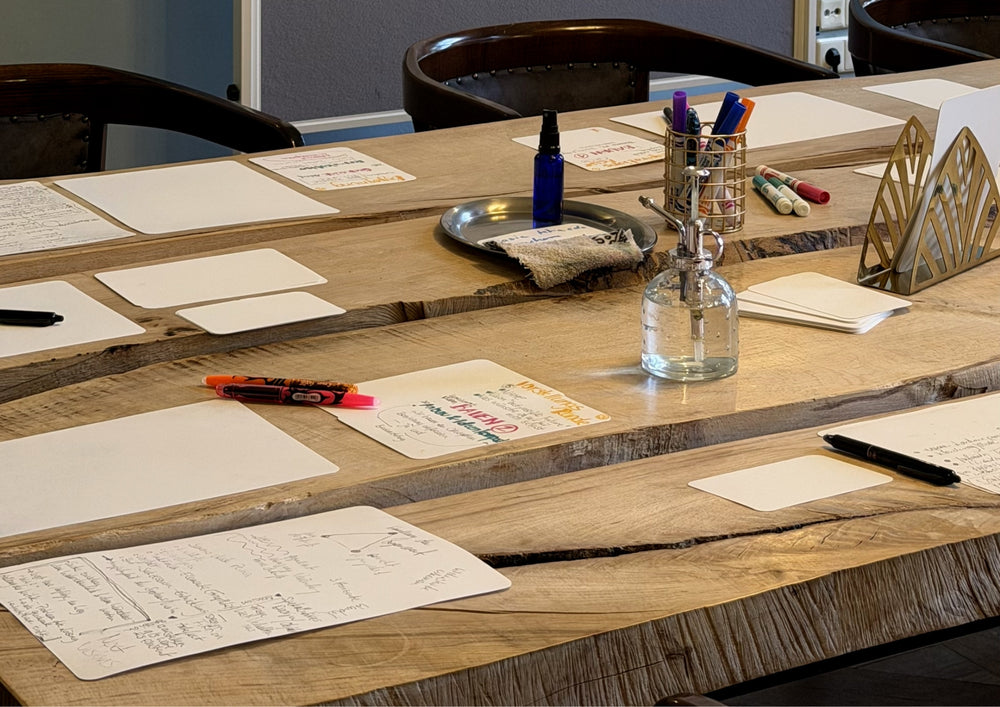
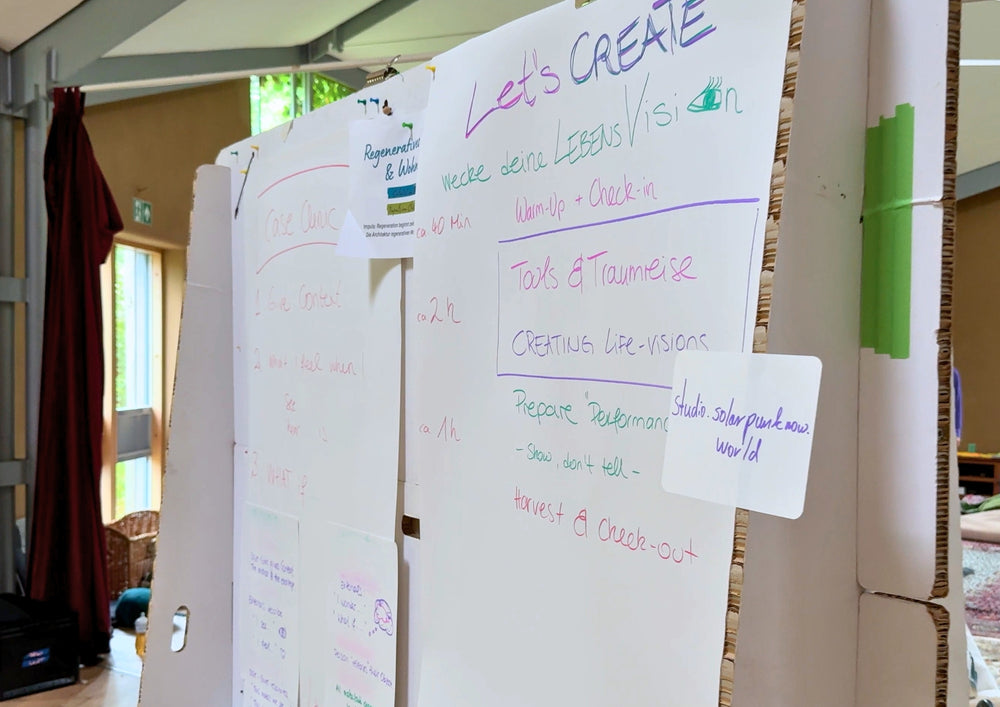
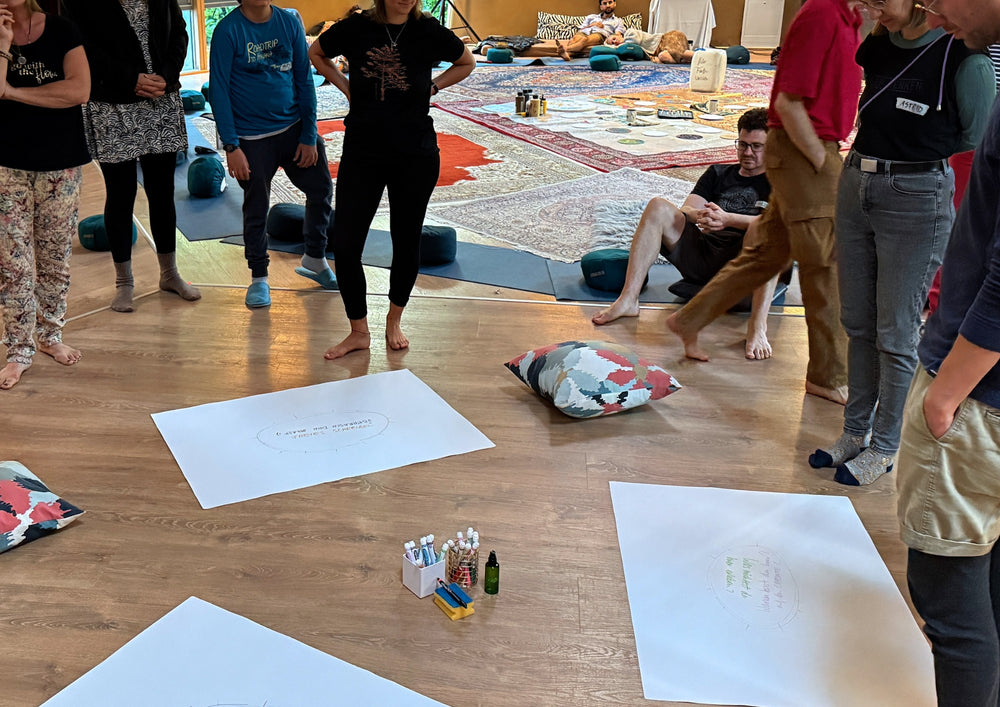
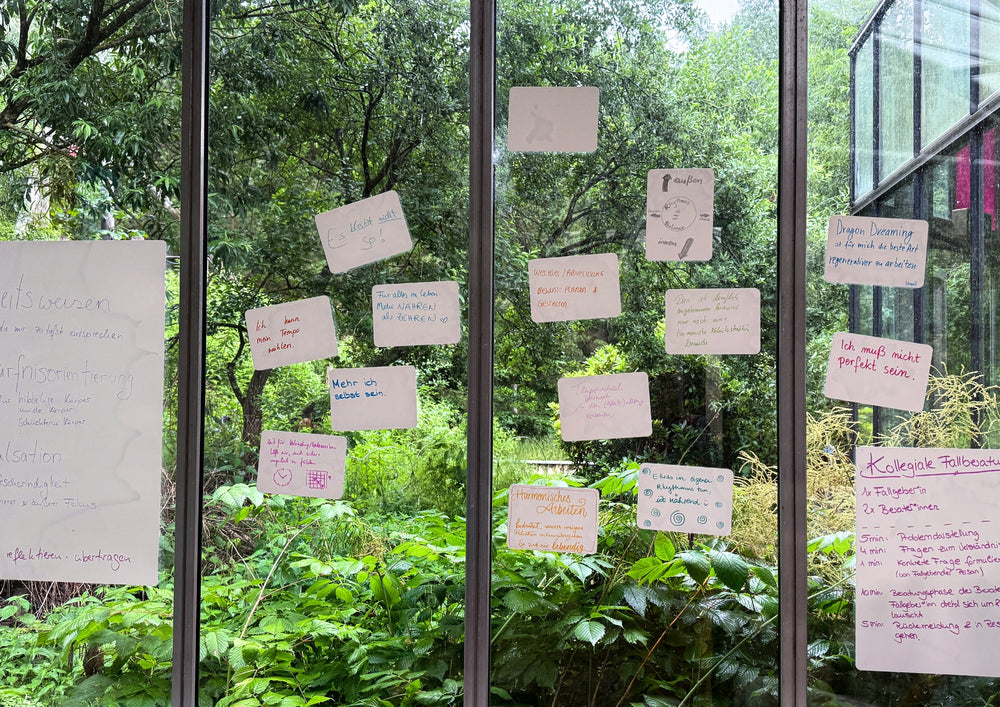
At Coconat near Bad Belzig: XXL Board on the pinboard, the matching formats on the tables, pens, water and a cloth within reach for everyone. When the surface lies in the middle of the table, the conversation turns inwards, and the room becomes quieter.
Minis for the short thought, Notes for a little more, Cards for the context, a Board at every seat as a playing surface. Anyone who would rather write than speak puts their card in the middle and is heard just the same.
Simple partition walls carry the Boards effortlessly. The wall stands where the group needs it, and moves along when the group splits up.
The Boards lie on the floor, everyone stands around them. A different culture of gathering: equally far away, equal access, and the hierarchy stays outside.
Large glass surfaces carry the whole subject. What the group works out grows on the wall, and whoever facilitates sees the path the thinking takes instead of only the result.
Garden, grounds, on the move
With the outdoors.
Rolled up in the backpack, written on your knees, hung on a branch. Rain does not bother the material, so the pen alone decides what should stay outside.
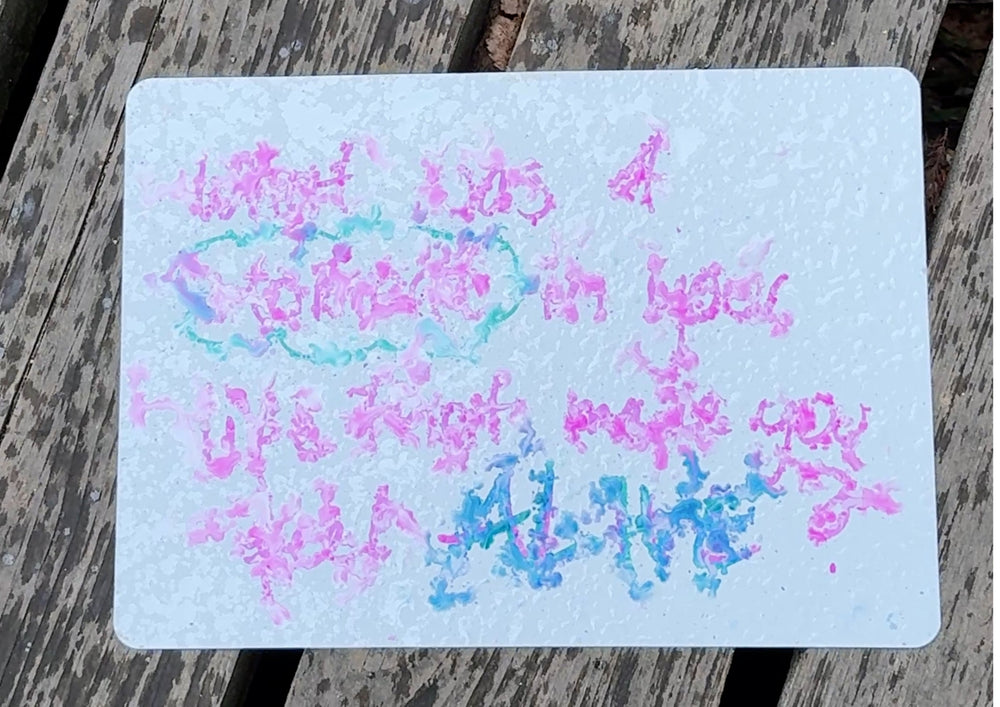
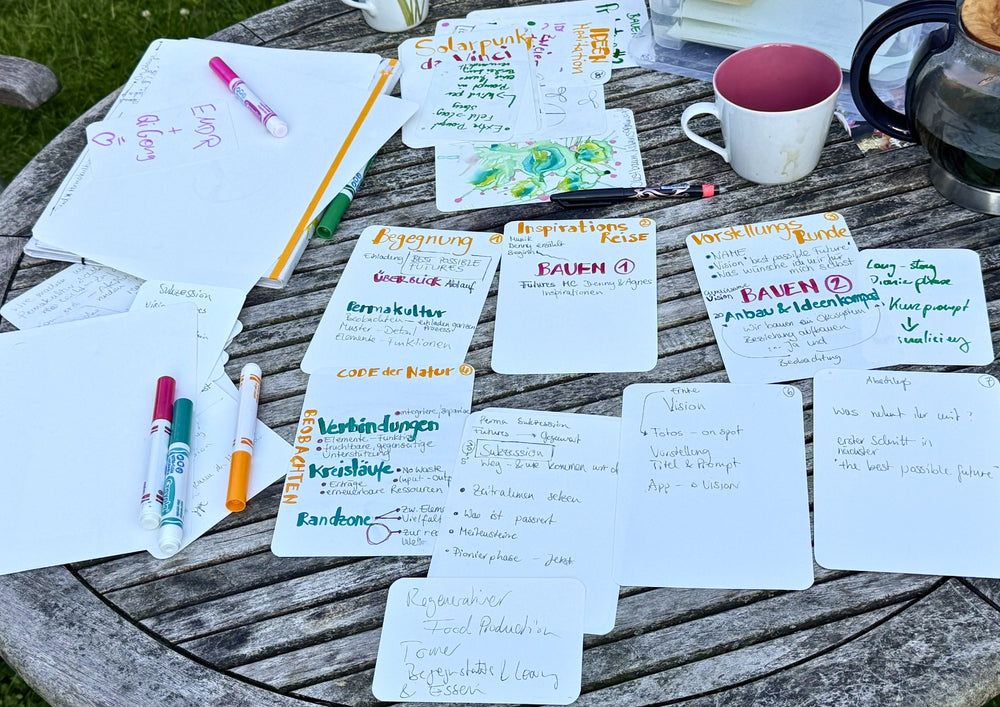
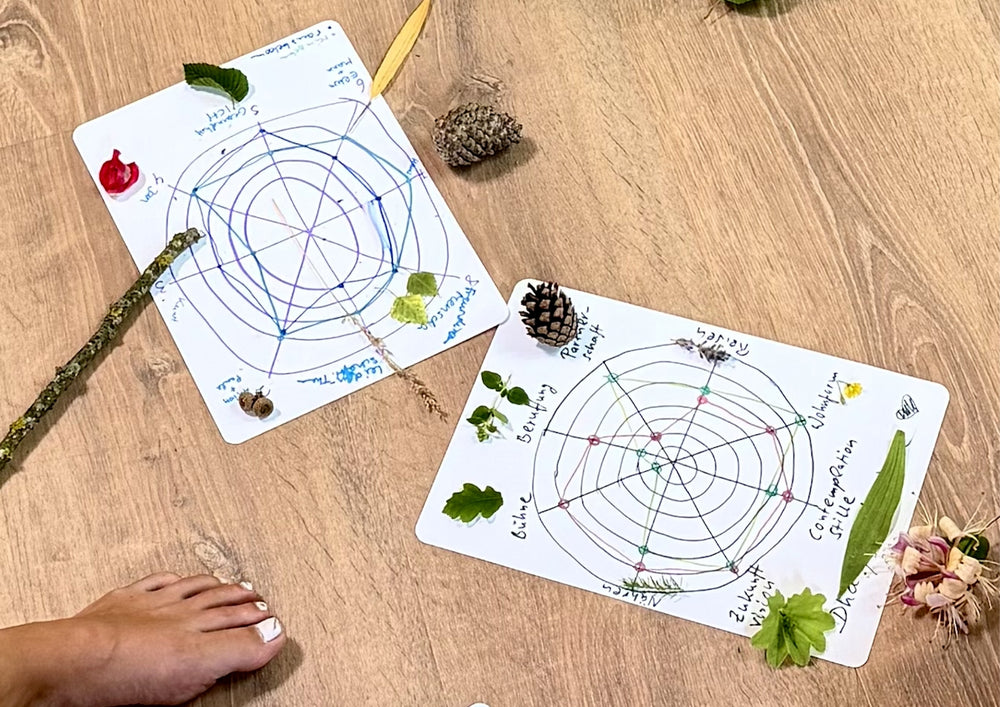
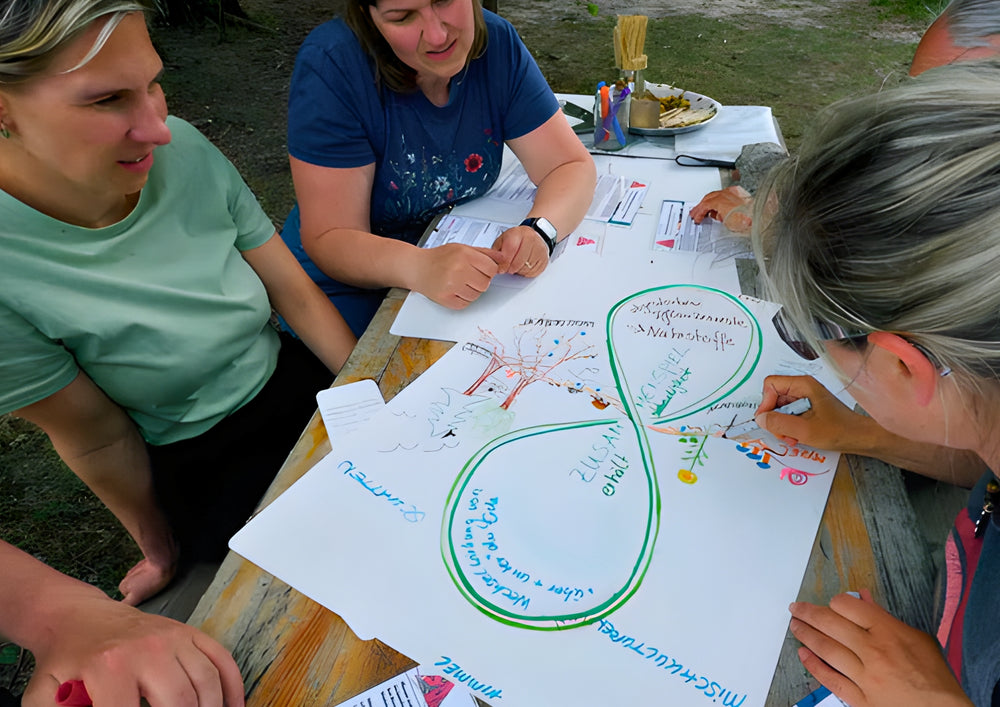
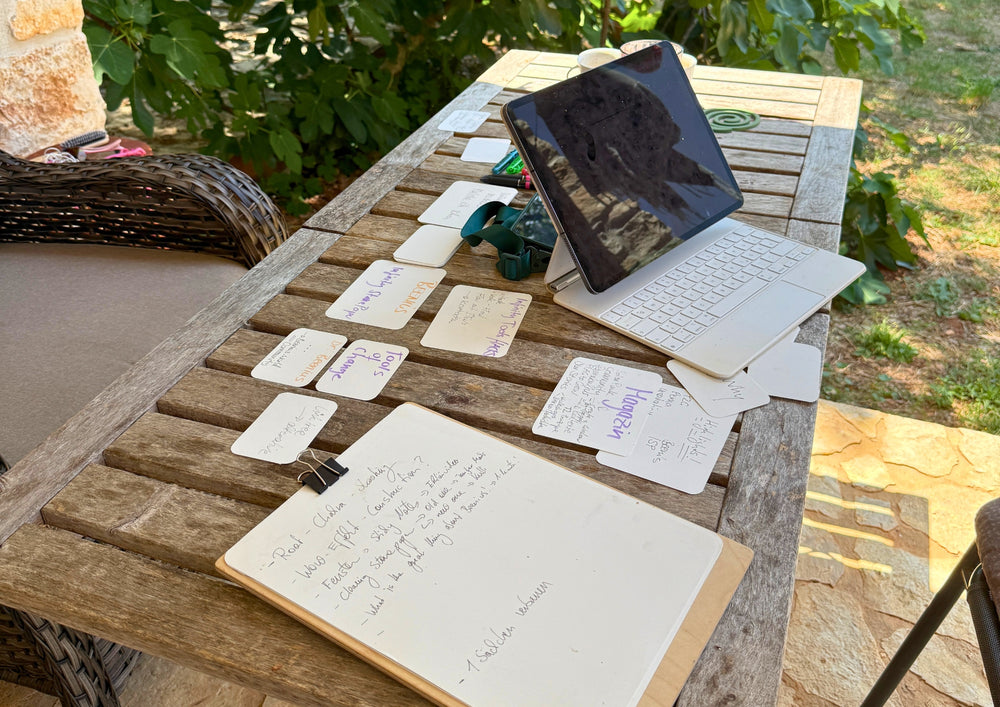
Rain washes off water soluble felt tip, permanent marker stays. The sheet itself survives both, so the pen decides what should stay outdoors.
In a little wind the cards stay put, in a lot of wind they fly. The material takes both, and outdoors a way of working develops that hardly ever happens indoors.
Soil, blossoms and cones leave traces that stay on ordinary paper. On stone paper you simply wash them off, so what you find can go straight onto the card.
Outdoors the group sits around the surface and shapes it from every side. The poster takes shape from four directions at once, and for those taking part that is exactly where the learning happens.
Laptop out, sheet beside it, terrace or veranda. The computer for what is finished, the sheet for what is emerging, and both work anywhere.
Beenius, landscape, model
With the built.
Paths, water and surfaces are drawn on, the models are placed into them. Cards name what has been built and move along when the plan changes. That way the built gets language, and the language stays movable.
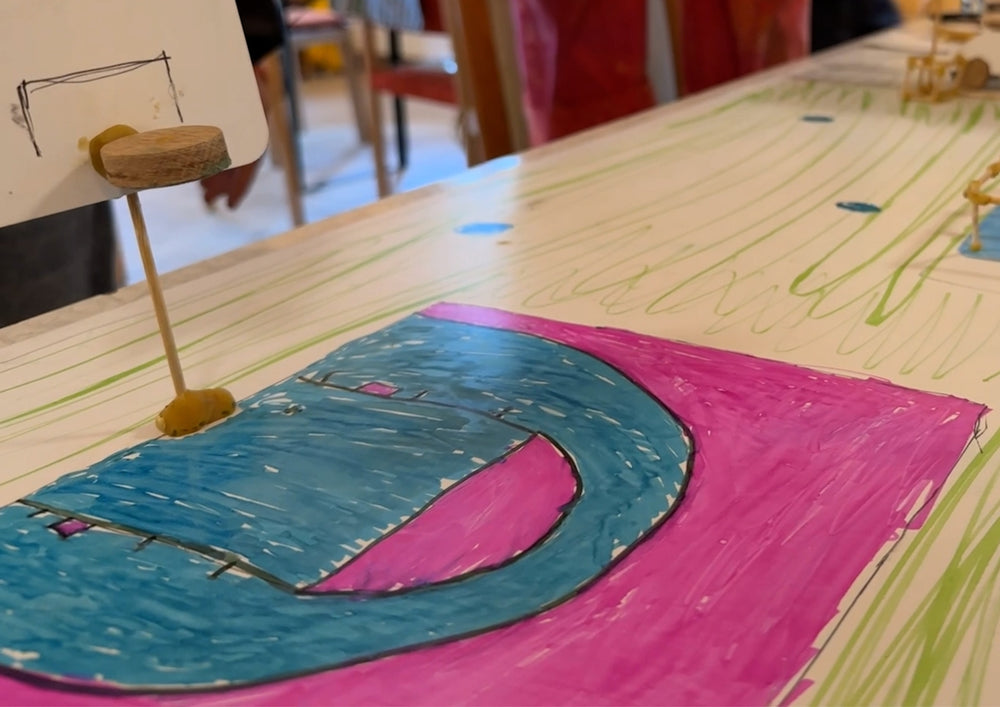
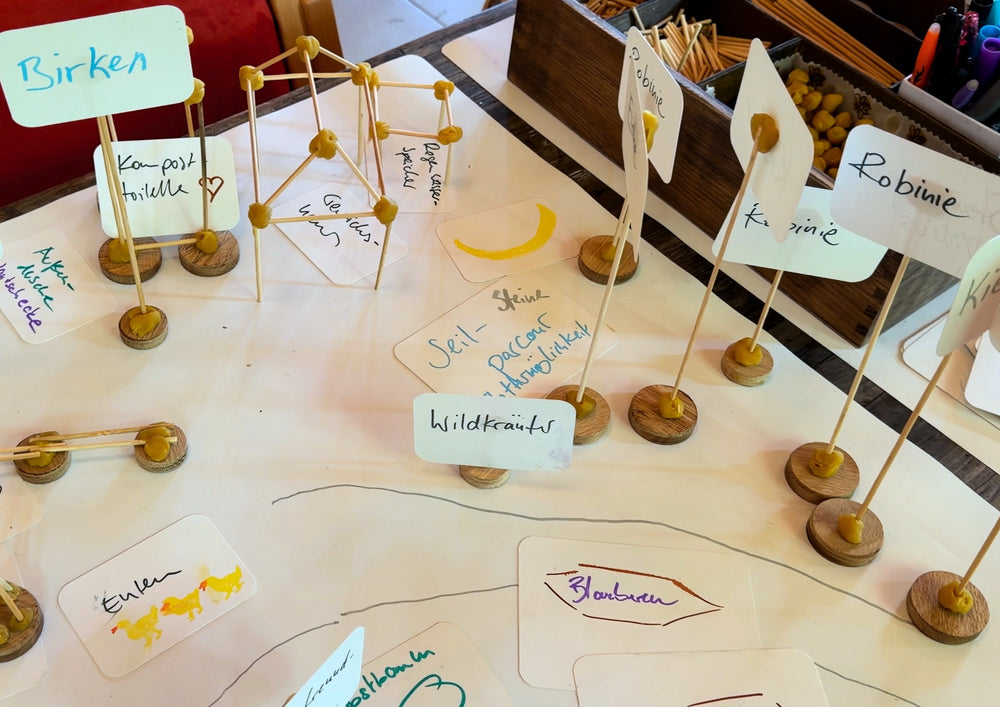
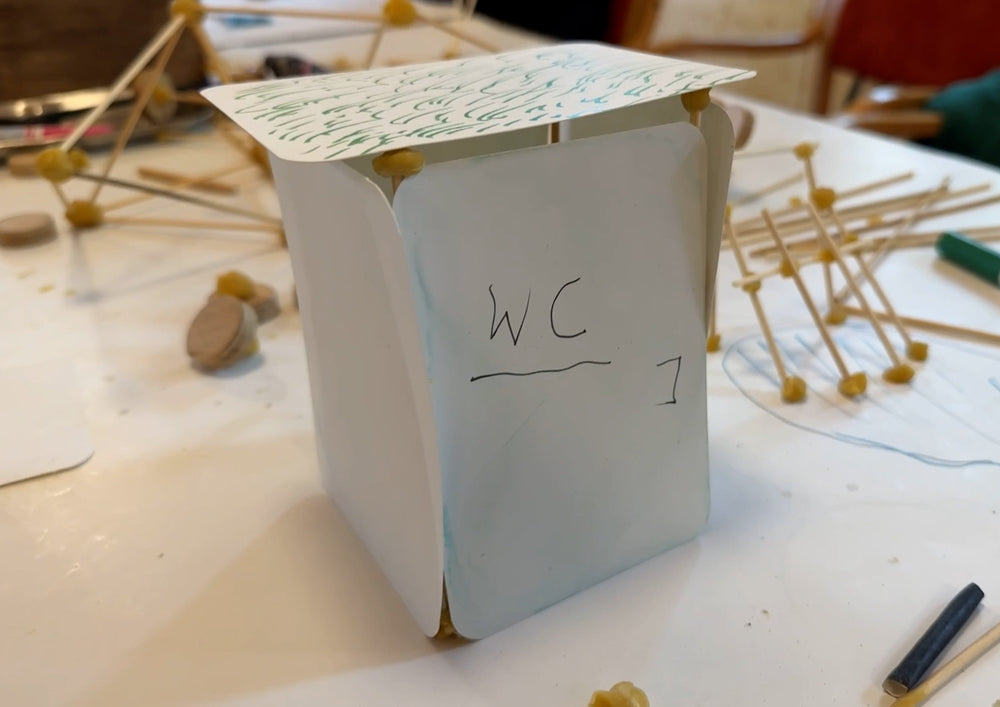
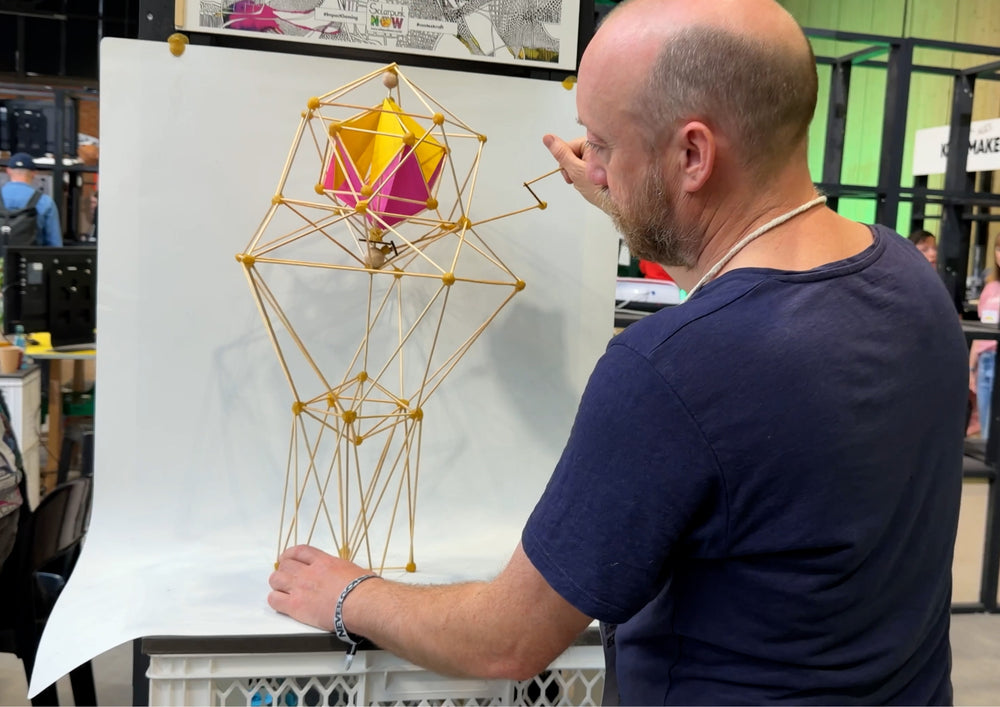
Stone paper gives surface and colour, Beenius gives the third dimension. Together they are the Infinity Tools: build, label, rebuild, and at the end everything is free again for the next landscape.
The Minis sit in the Beenius wax and label the landscape, for example while designing your own garden. After the workshop they go into a water bath and are free again.
Folded, the card stands as a house in the plan. The crease holds, the writing on it becomes a building part, and the model gains one more structure.
The wax fixes the stone paper to the structure. Large Boards become a photo background with a soft transition, and the model stands in front of its own landscape.
Afterwards
With the digital.
One photo, and the devices read the handwriting along with you. What took shape at the table then carries on in the chat, in the board or in the notes. The surface itself is already empty again at that moment.
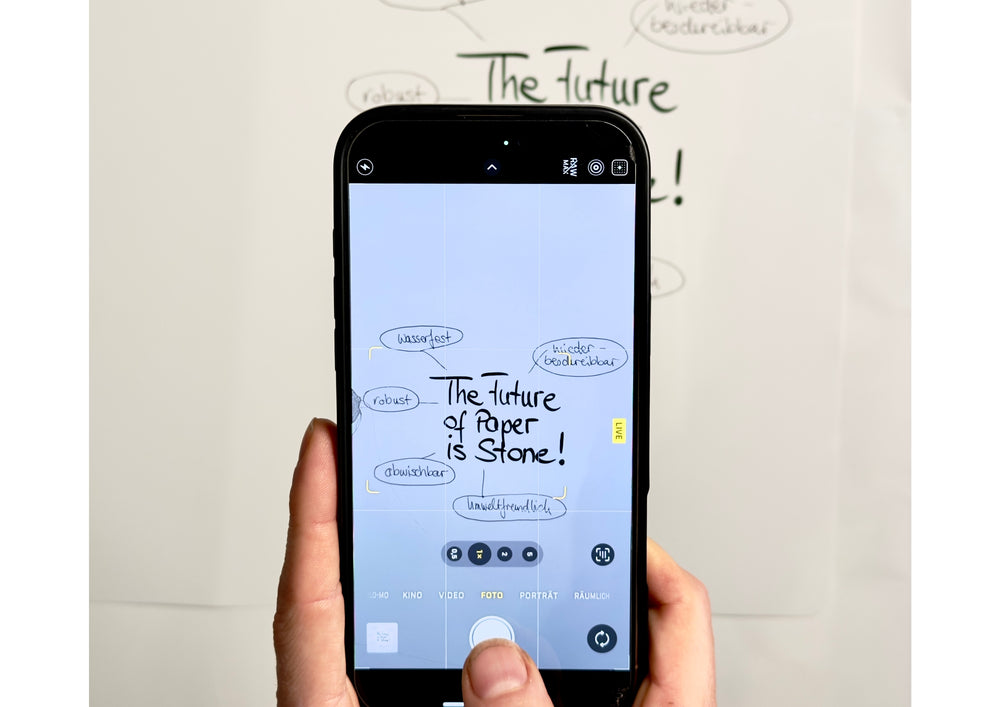
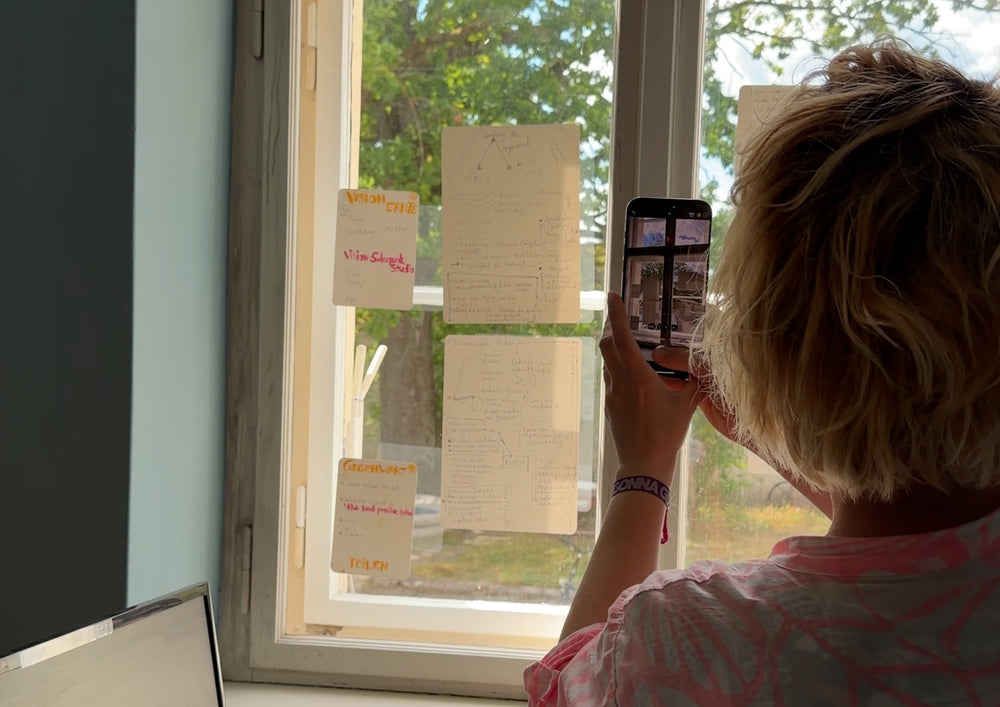
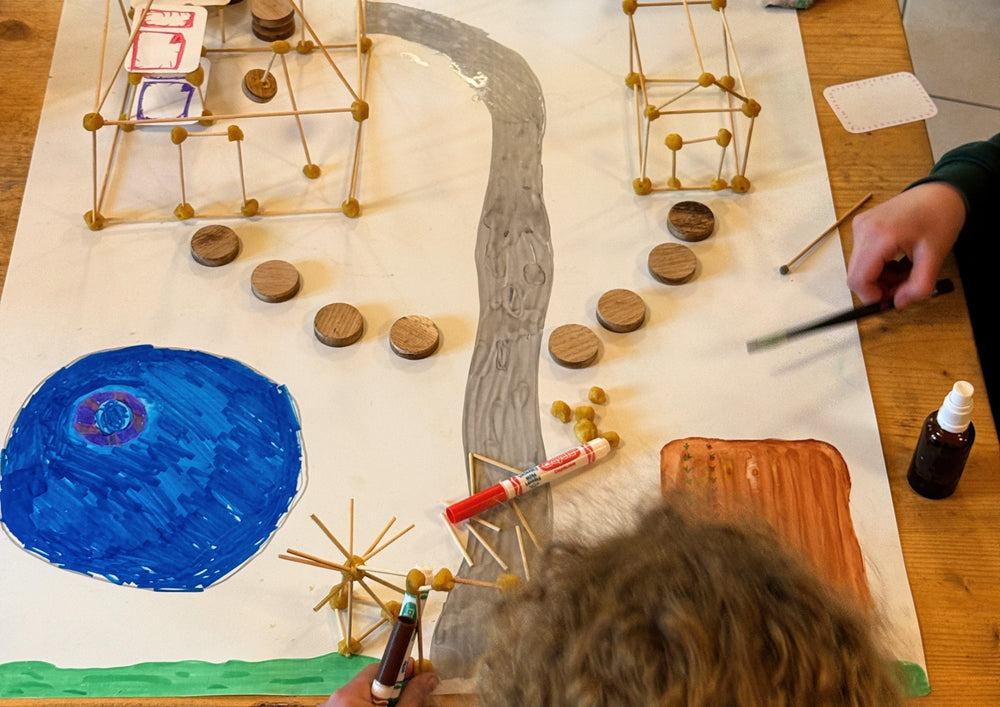
The photo goes into Claude or ChatGPT, onto the Miro board or into the photo library. The first pass stays analogue, with everyone at the table, the rest becomes digital. Gather widely, then save it, then free for the next thought.
Cards on the pane, phone in front of them: the handwriting is read reliably, even against the light. If you work with Notion or Miro, you hand it straight over there and sit at the computer less afterwards.
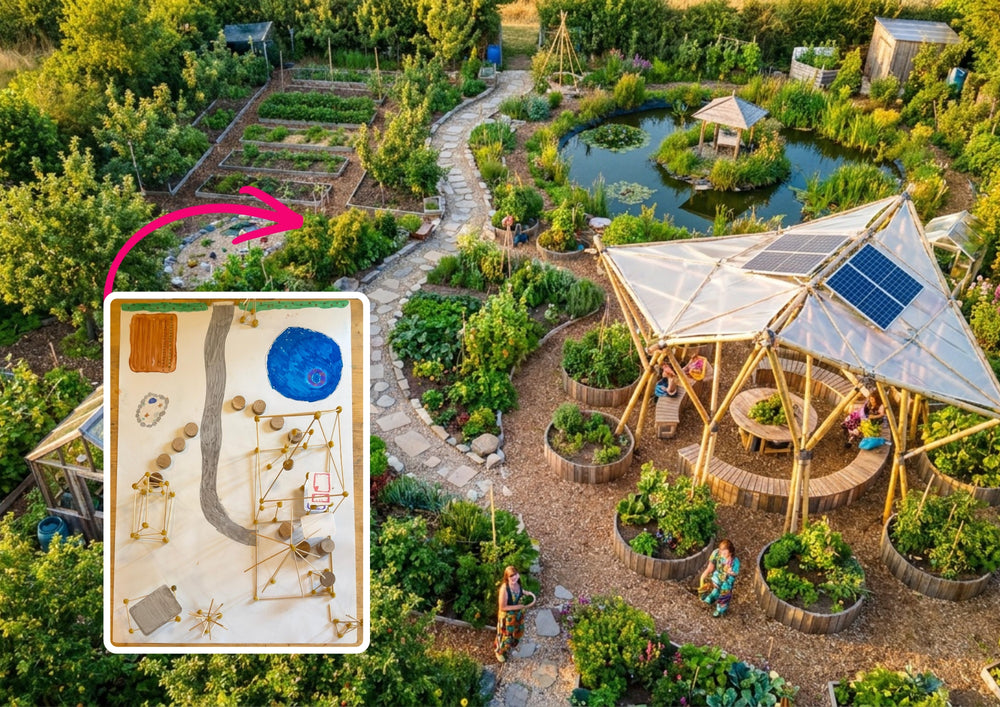
In our workshops the photo of the built landscape and the story that goes with it become the future model of your own garden. What stands there in bamboo and cards becomes the template for what is meant to grow.
From sketch and photo the image generator creates a picture of the garden as it could become. The human makes the opening move, the AI draws the vision out of it, and then the next round begins on the empty surface.
