

Visions of the future at re:publica 2026

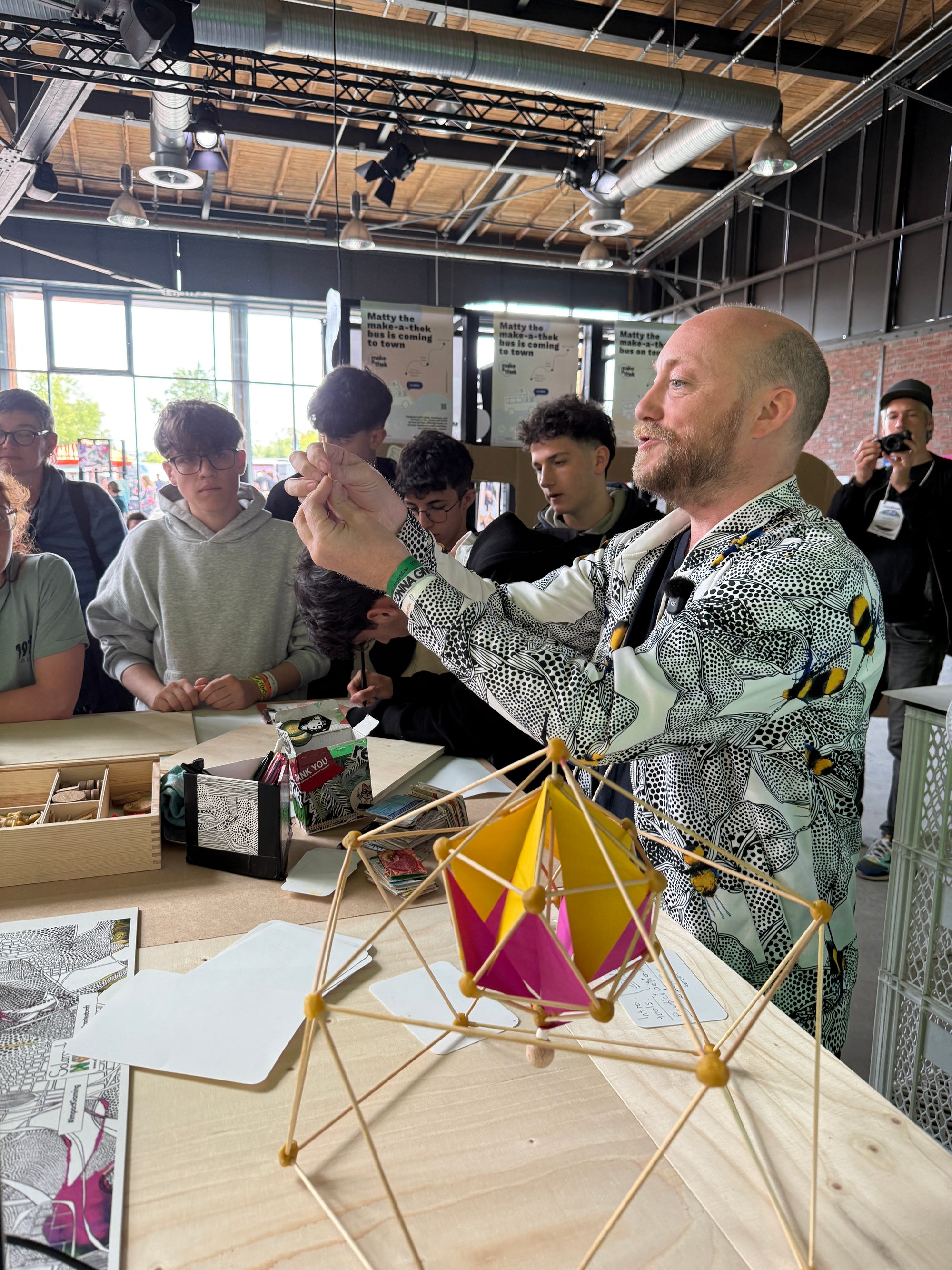
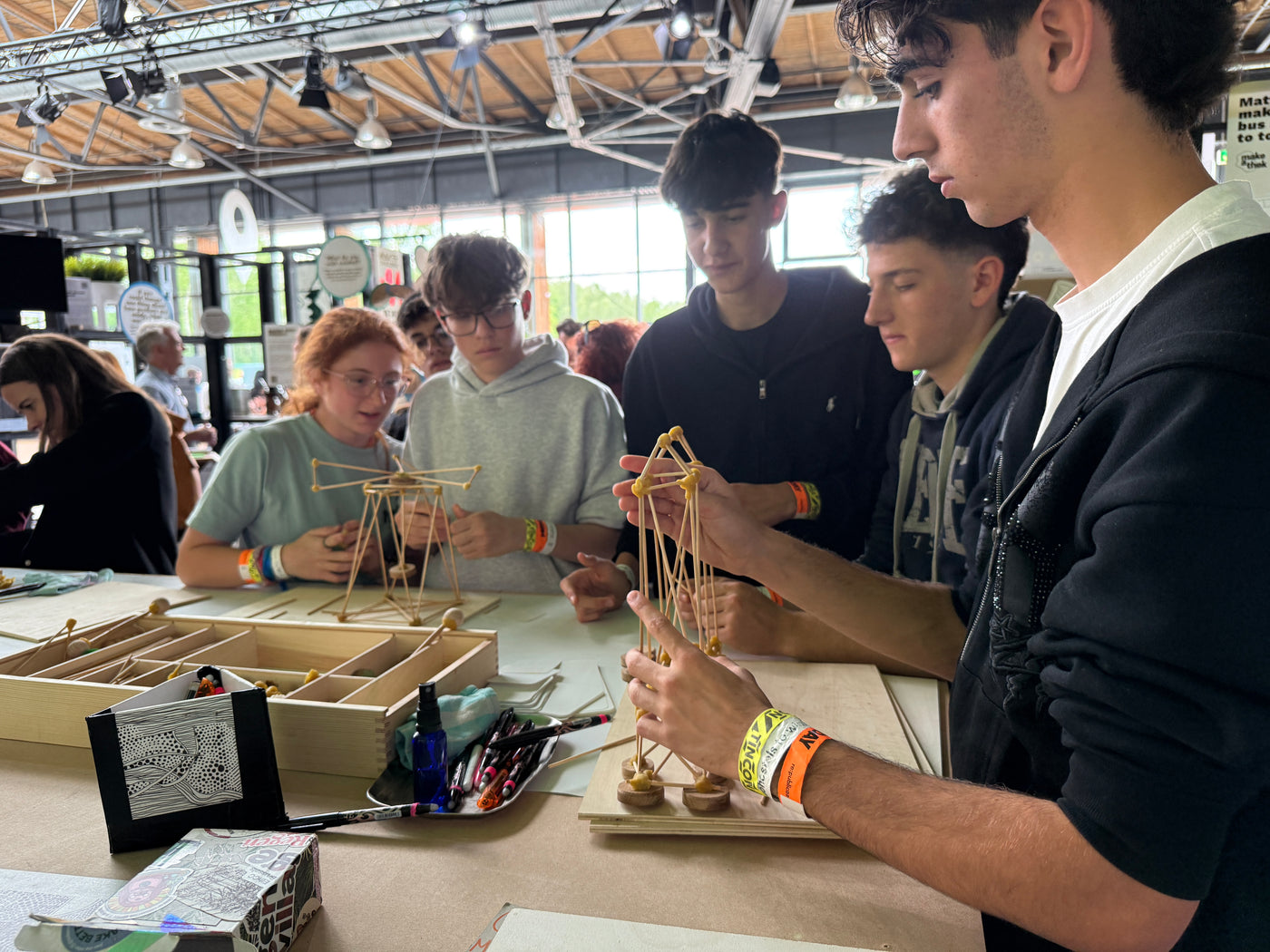
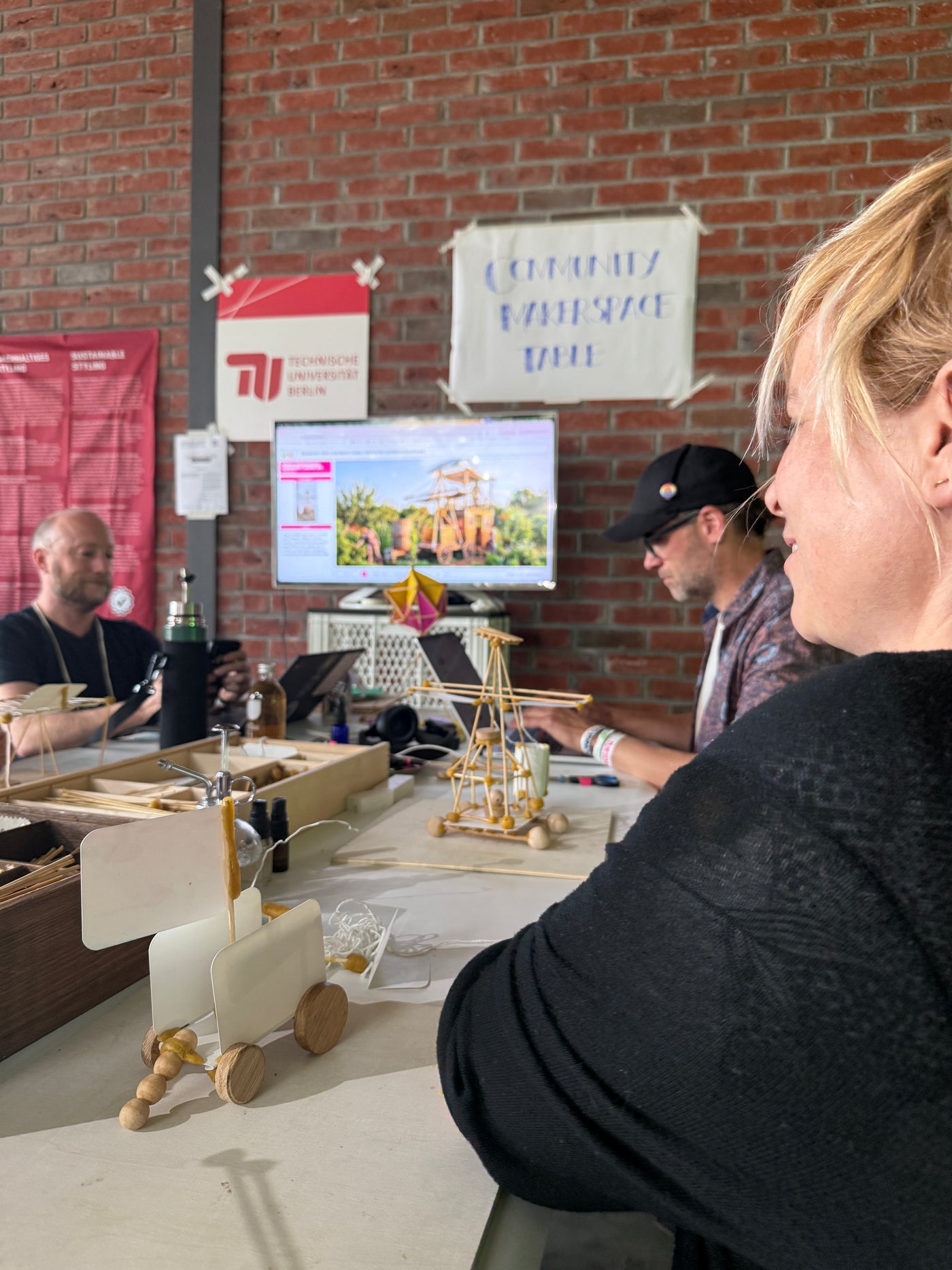
For three days our table in the GIG makerspace at re:publica filled up with visions. 150 models made of wax, bamboo and Stonepaper came about, and we show the highlights in the gallery.
Our Solarpunk Studio worked beyond all expectations: whoever came built something, with Beenius or with recycling material. We digitised the models, added context, and seconds later the idea appeared as a living solarpunk scene on the wall.
The aim was regenerative architecture that can be built from the here and now. The core moment was the transformation: your own handwork became a believable world within 60 seconds.
The principle
Whoever came to the table built something. With Beenius, with Infinity Stonepaper, with bottle caps, straws, bamboo sticks. Some with a plan, many just starting out. We photographed the model, sent it into the app, a few words about the idea, a place, a story. Seconds later the model appeared on the wall: the same structure, now set inside a solarpunk scene, with people, with light, with atmosphere.
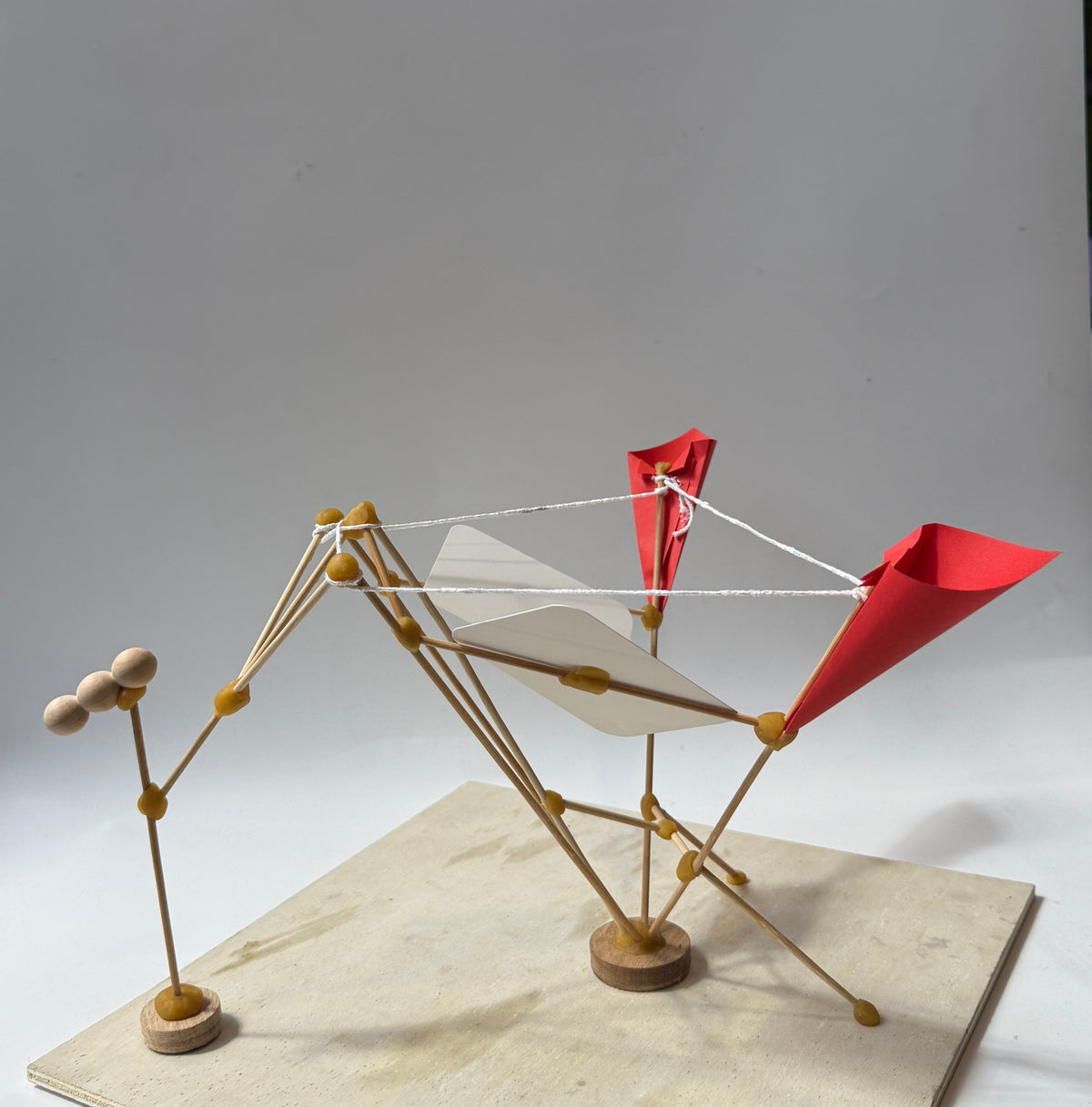
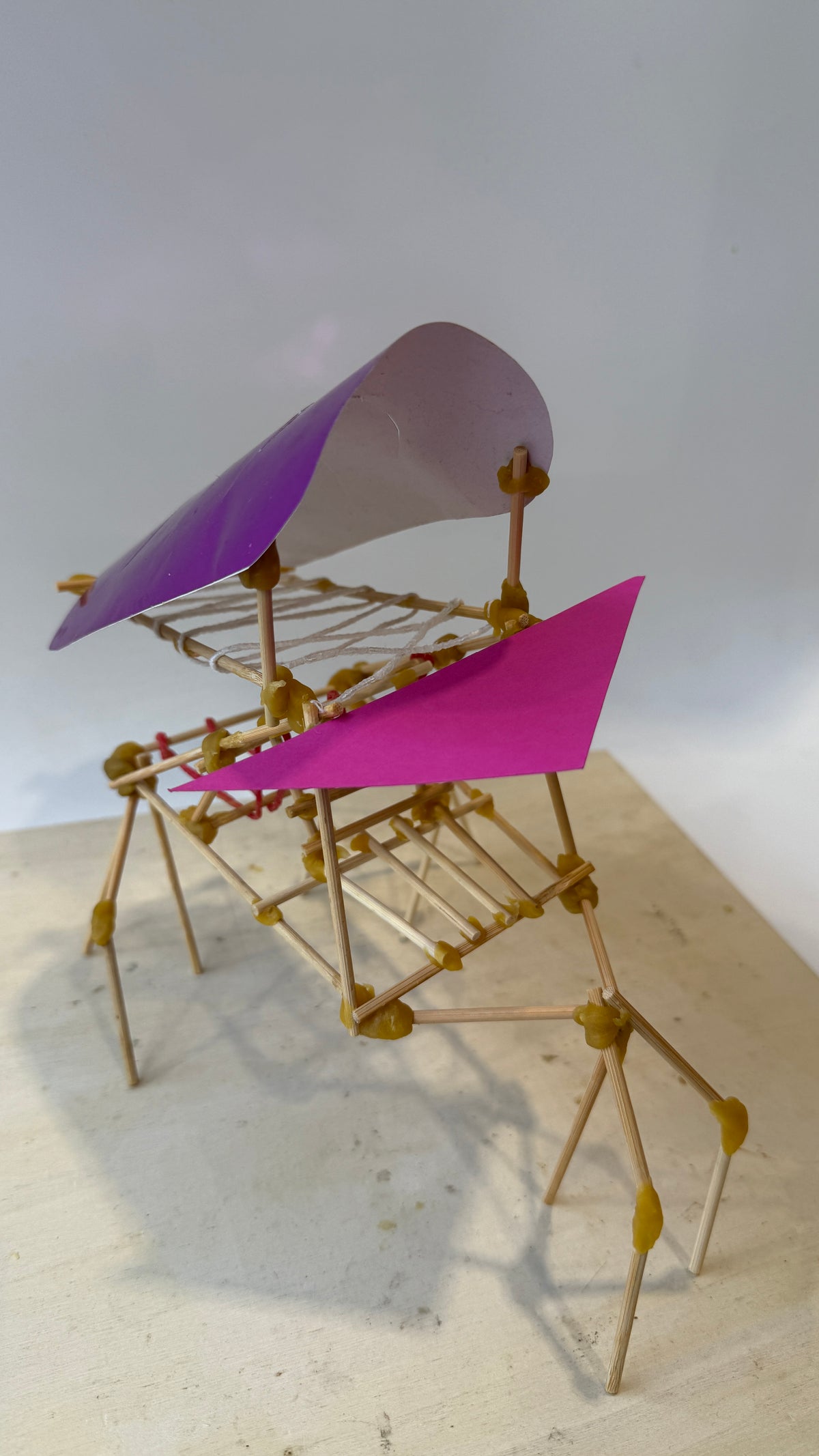
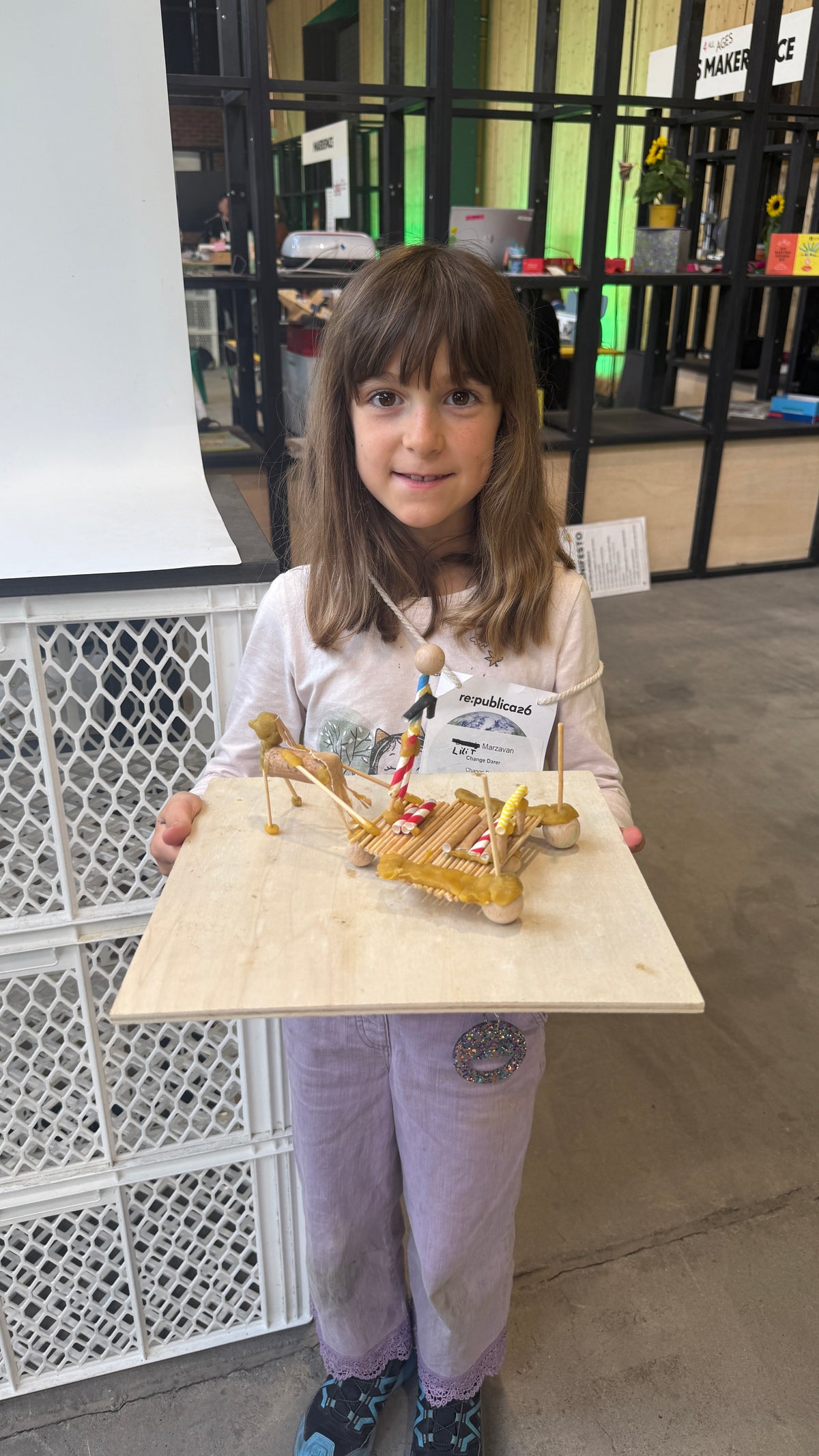
Deliberately close to the present. Architecture, landscape and community that can be developed from the here and now: regenerative, feasible, believable. Layered planting instead of lawns. Bamboo instead of steel where possible. Diverse communities, warm light, real materials.
The reversed order
In most AI image worlds everything starts with a prompt. A person types a sentence, the machine turns it into an image. What comes out is essentially the average of everything the model has ever seen. Pretty, often impressive, and far away from the person who wrote the sentence.
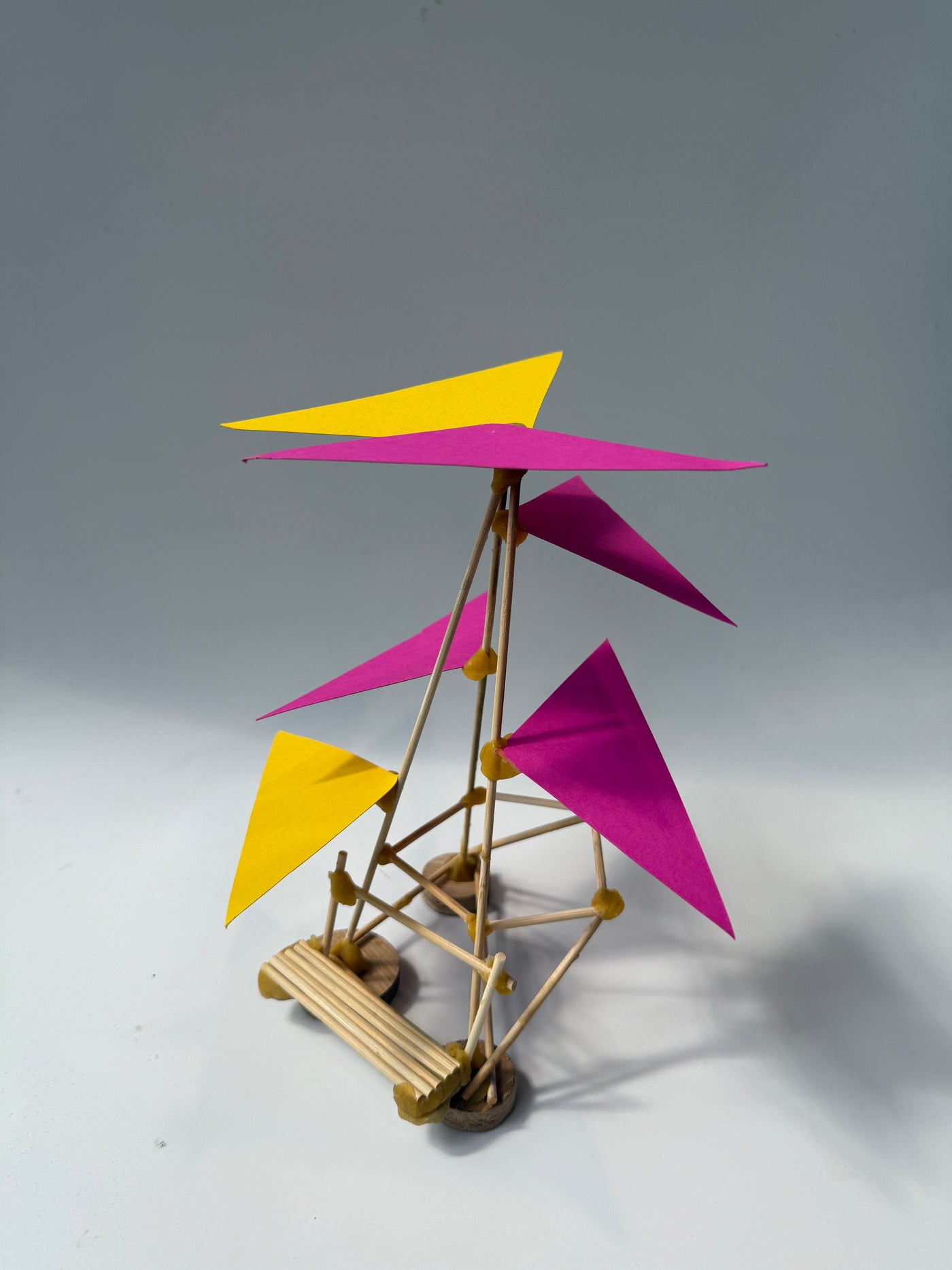
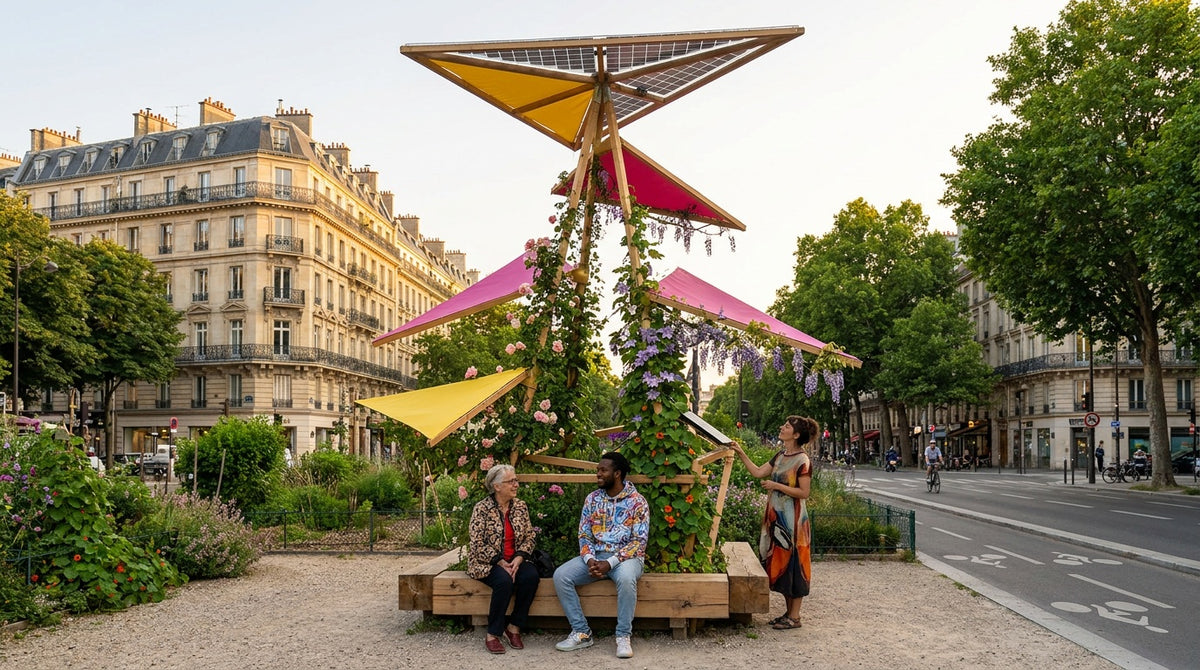
In the Solarpunk Studio it runs the other way round. Analogue first, material first, your own idea first, in a form that someone pressed with their fingers. Only then the AI. It translates, and the idea stays human.
That is a question of substance, more than an aesthetic one. If creativity begins with the machine, the shared level moves towards what the machine can do. If we reverse the order and use AI as an amplifier for human ideas, it grows. That difference was noticeable at re:publica in every moment when someone stood in front of their own vision on the wall.
What surprised us
The quality of the building rose as soon as people knew that their model would become part of a solarpunk world. What should there be? What could I invent? What is missing? The frame raised the ambition all by itself.
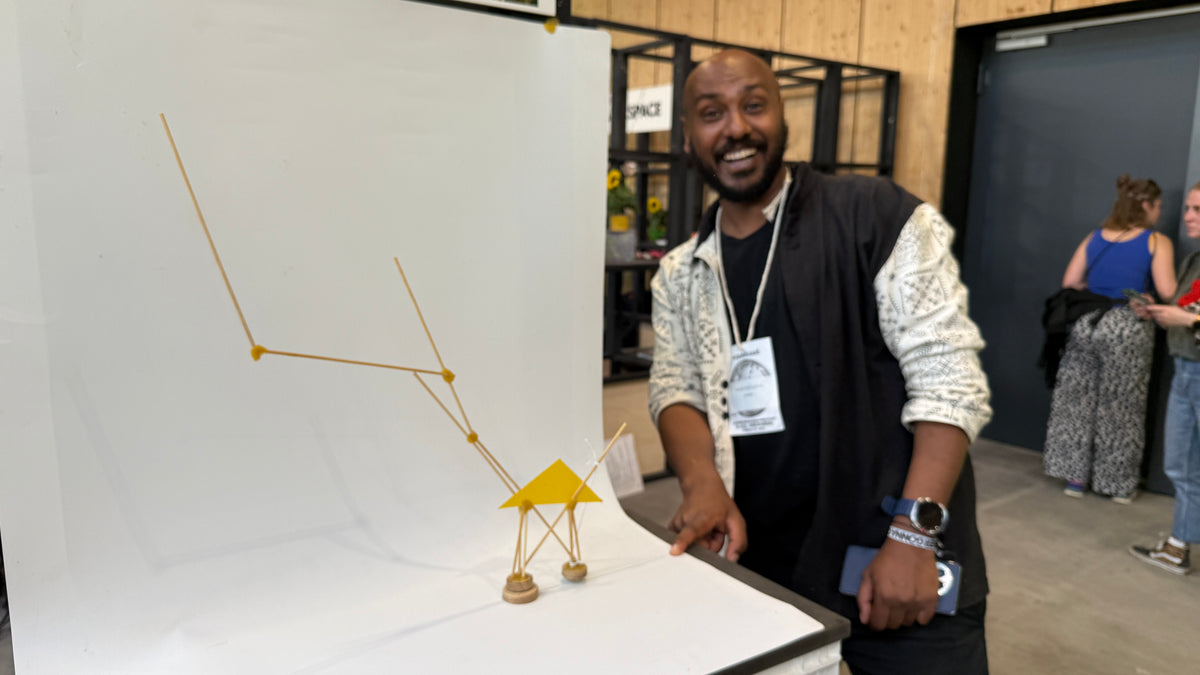
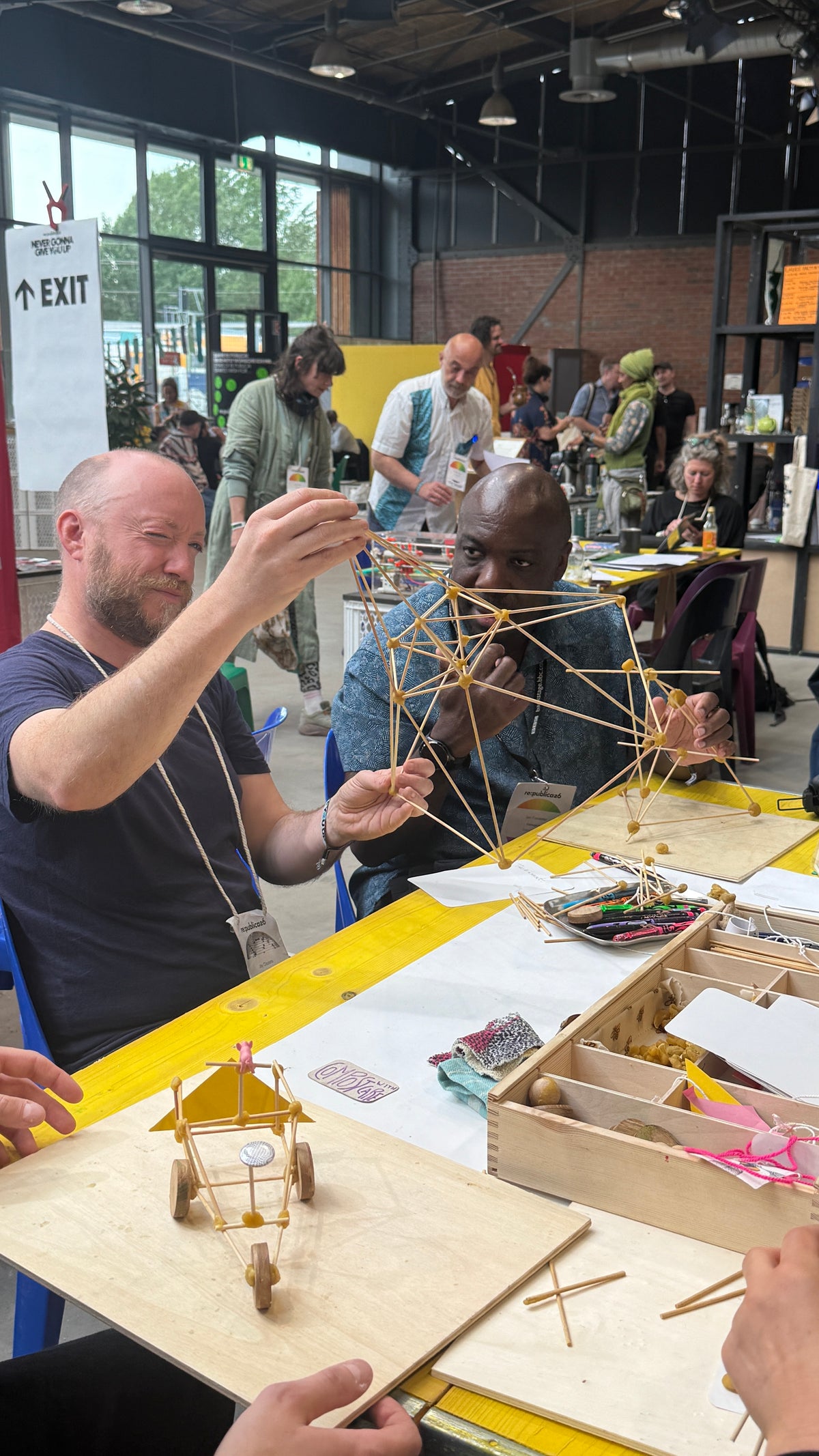
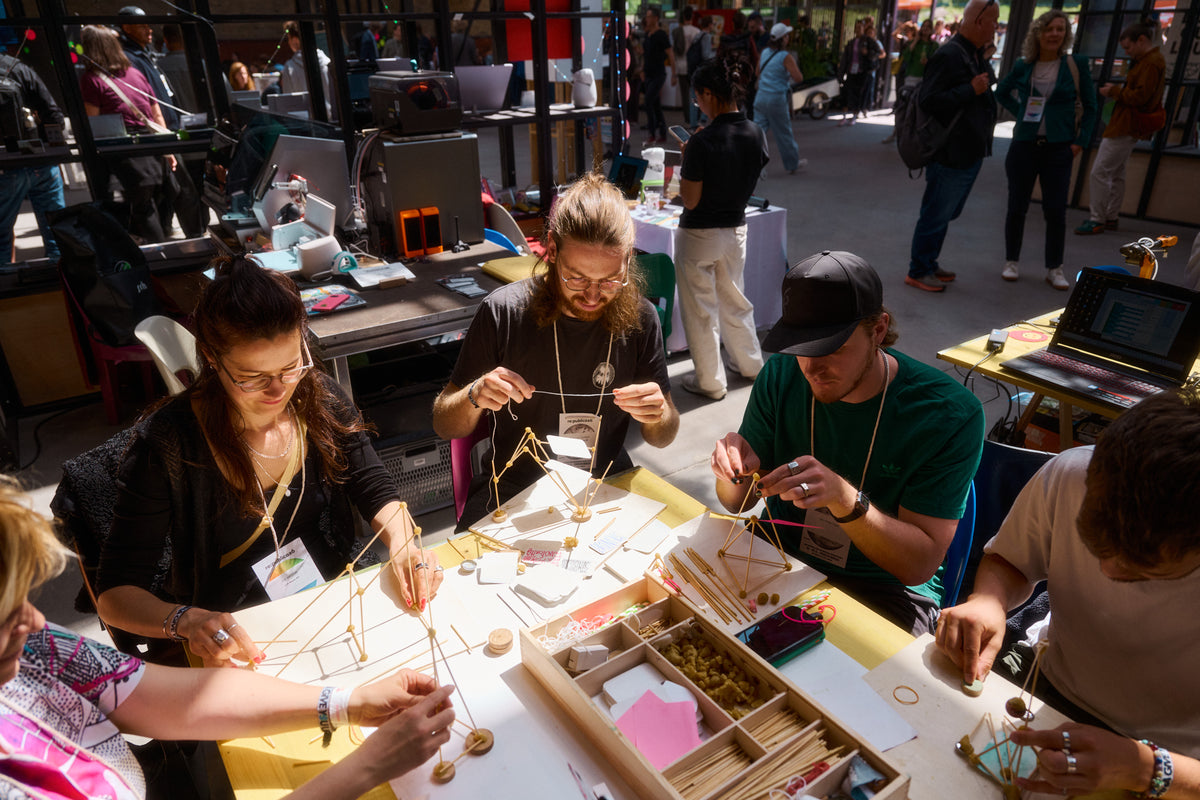
People from urban planning, future workshops and participatory processes in particular stayed at the table. One urban planner told us that in her participation formats she has been struggling for years to get people to dare something. Here everyone dares, because the material forgives and because in the end something beautiful comes about that is taken seriously. Wax invites everyone: children, adults and people who have not seen themselves as creative so far.
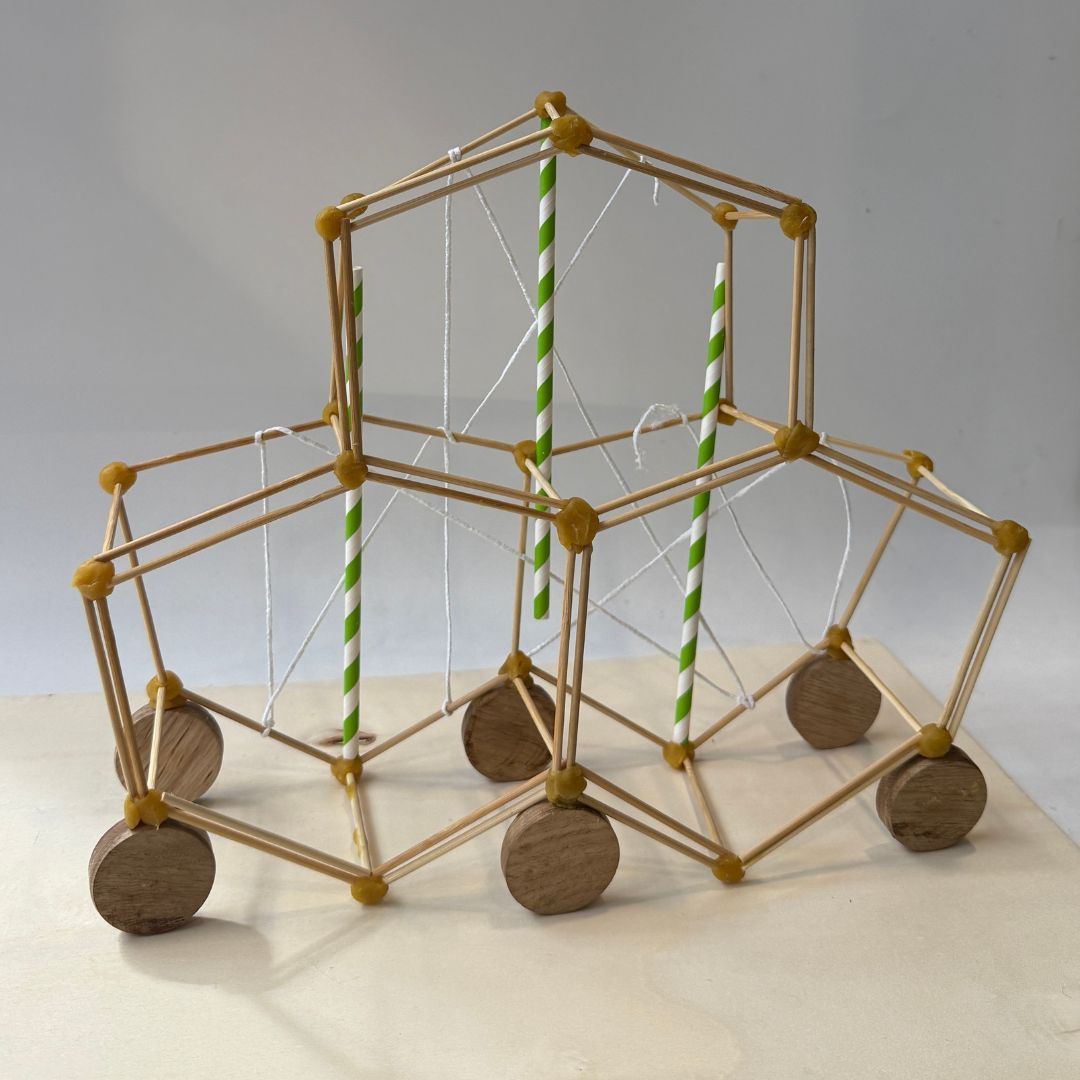
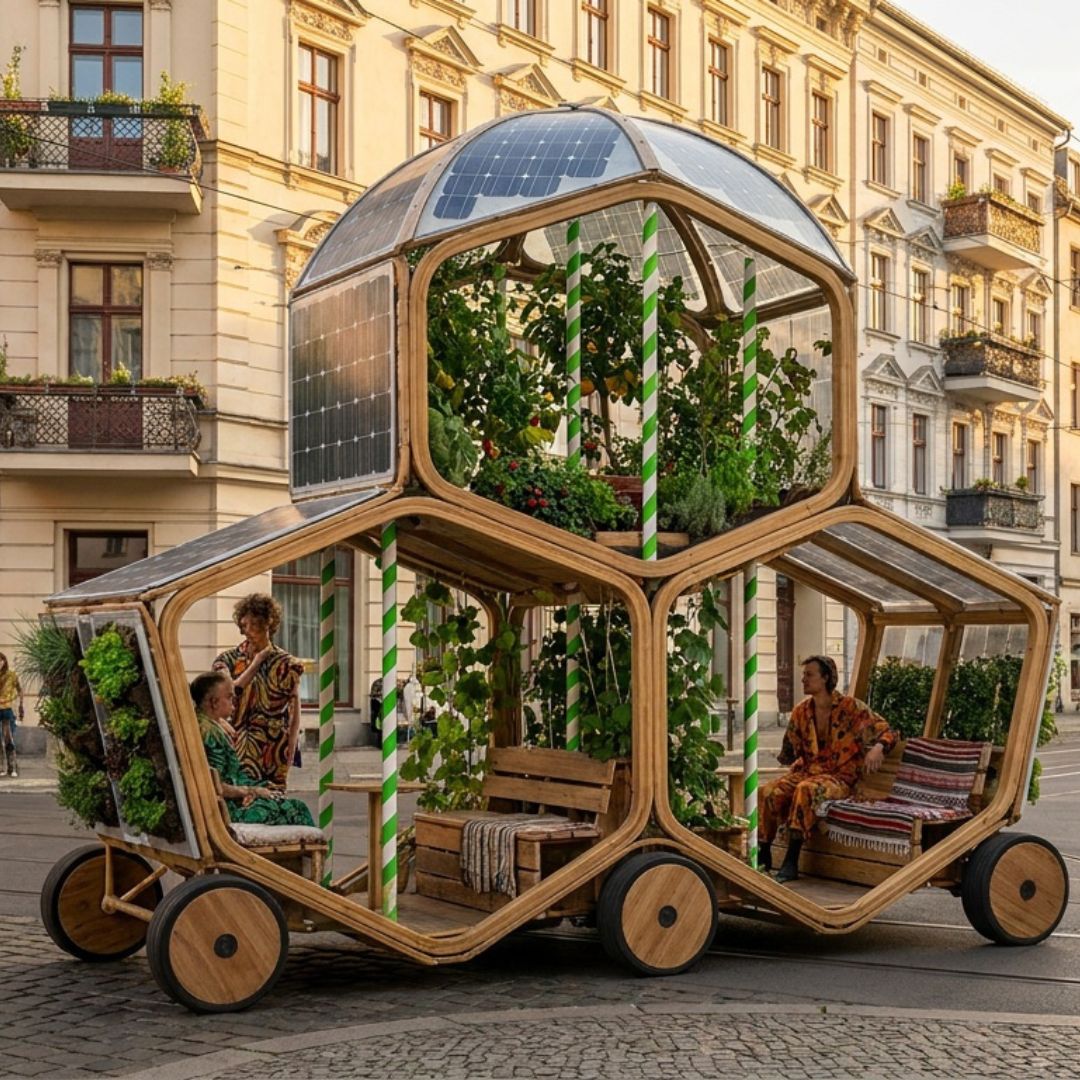
The designs ranged from playful bamboo pyramids flying through space to Ecobility, a futuristic mobility concept with a new bus shape, modular elements, public meeting spaces and plants on board.
Beenius and Infinity Stonepaper are tools for having a say in the future. They make design democratic. They lower the threshold far enough for everyone to join in, and at the same time raise the ambition, because what comes about at the table is taken seriously.
If we reverse the order and use AI as an amplifier for human ideas, the shared creative level grows. The idea stays human.
Further contexts
The first prototype was deliberately kept open. The system unfolds its full effect when it is adapted to the context at hand. We see these fields of use among others:
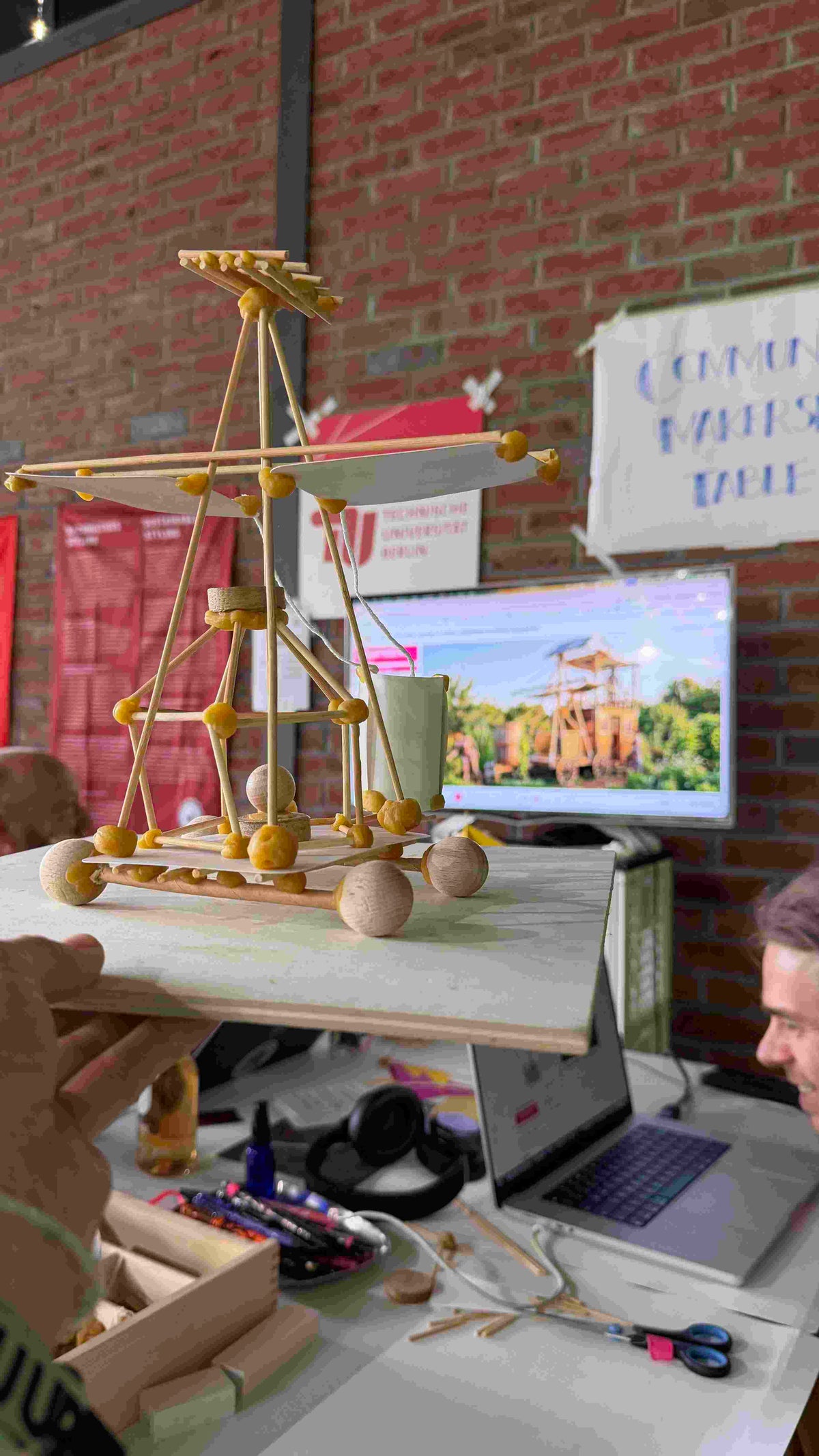
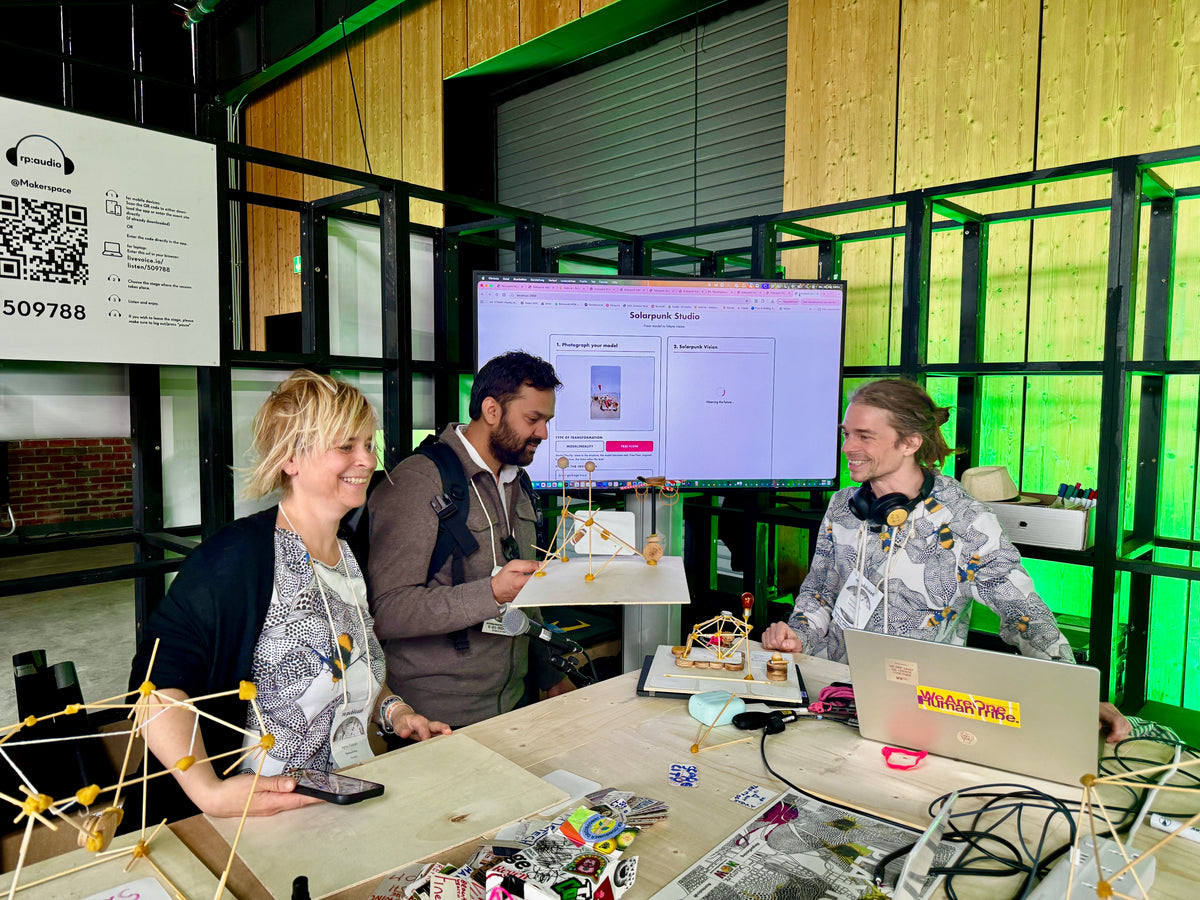
- Urban development and neighbourhood work: people who live in the neighbourhood shape squares or streets directly with wax and immediately experience a realistic visualisation of their own ideas, well beyond sticky notes on maps.
- Schools and educational institutions: the class designs playgrounds or places to learn. Bringing handwork and AI architecture together creates an identification with the place of learning that classic committees rarely achieve. This is where our PLAYtoGROW method and permaculture principles work together.
- Companies and organisations: teams model regenerative changes to their campus by hand instead of by slide. Seeing your own grounds as an edible ecosystem creates a new view of what is feasible.
- Rural communities: for villages in structural change, the studio opens up barrier free access to participation, arriving culturally and linguistically where classic formats reach their limits.
The complete gallery of the re:publica visions
All 50 works of future art and hands on models are in our collection overview.
We are part of the Global Innovation Gathering
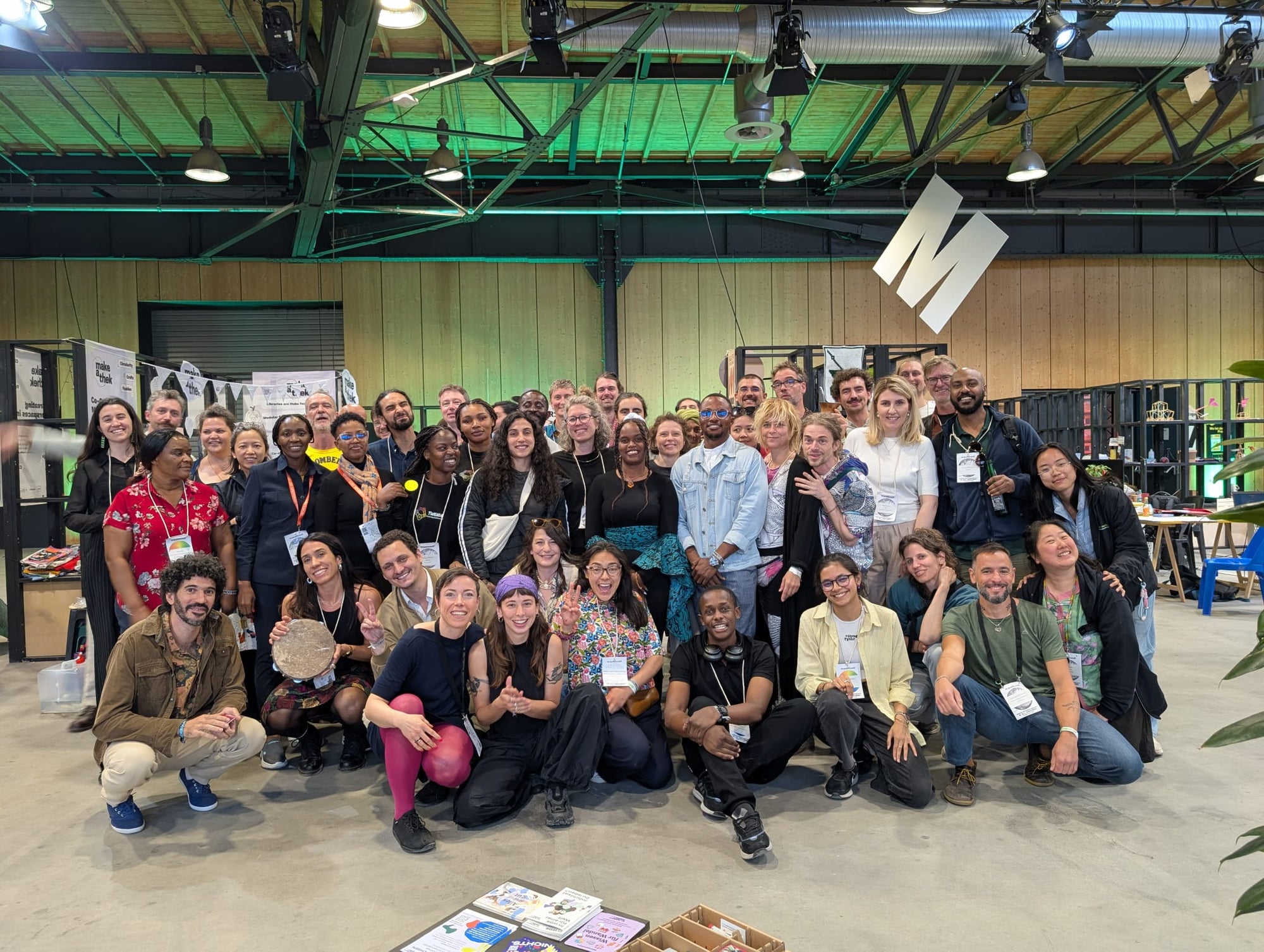
The Global Innovation Gathering (GIG) is a diverse, global network of innovation hubs, makerspaces and grassroots innovators from more than 55 countries, with a focus on the Global South. GIG supports projects that make regenerative ways of living possible directly in the communities through open technologies and community based processes: the Make-A-Thek, for instance, which turns libraries into circular makerspaces, open source devices for soil analysis, or local open hardware solutions from the countries of the global majority.
The network deserves support because it creates low threshold, often open source tools and knowledge: concrete, forward looking solutions that are often only discussed in Europe years later. Global cooperation and open exchange of knowledge make a fairer and more sustainable future possible.
The tools for it
You can bring Beenius and Infinity Stonepaper into your team, your company or your educational institution: modular systems for shared design, hands on collaboration and ideas that can be written anew again and again.


